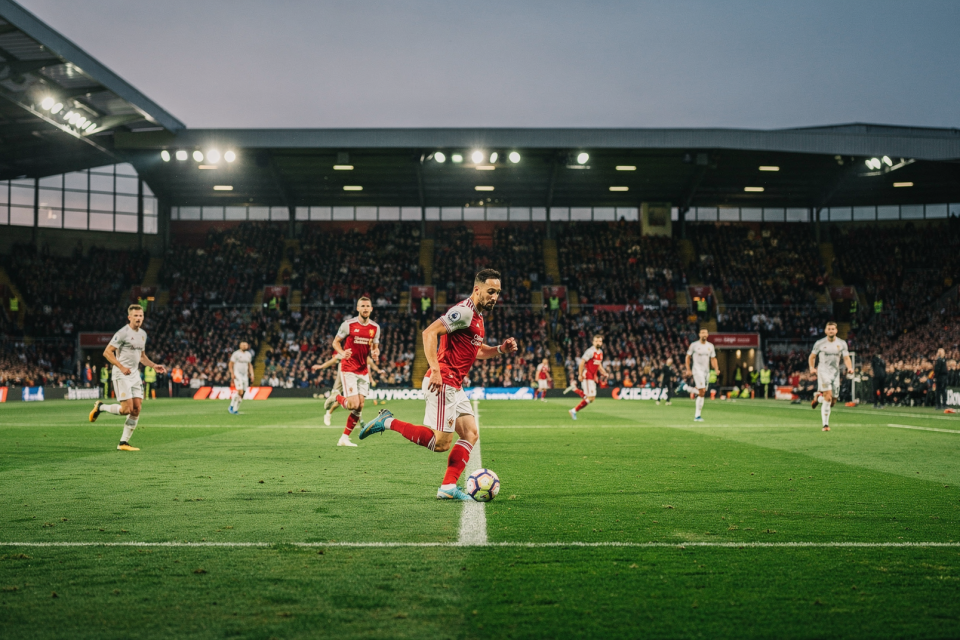
The trophy lift is a single frame. The real title race is a sequence of quieter, often invisible beats—an early rotation that keeps legs fresh for the quarter-final, a set-piece tweak that turns a draw into a win, the night a goalkeeper’s distribution breaks down under pressure and nobody outside the analytics room notices until it’s too late. The loudest headline rarely tells you why the trophy ended up in one set of hands. That explanation hides in the details, and good tournament coverage hunts them down long before the confetti falls.
Why tournament coverage is really about momentum, not just results
Tournament coverage isn’t a catalogue of outcomes; it’s the live mapping of a competition’s emotional and tactical tide. The best work in this space explains why the title is drifting toward one corner of the bracket, and which submerged forces might still swing it back. That kind of analysis treats the competition as a chain reaction. A single result—say, a scrappy extra-time win against a compact underdog—might not look like a landmark until you realise it drained the squad’s energy, forced a yellow-card suspension, and left the manager with a selection dilemma that will echo into the next two rounds.
Tournaments punish cumulative pressure. Confidence compounds, fatigue spreads, and small tactical advantages widen when opponents are too exhausted or too rigid to respond. The title often feels inevitable only in hindsight, but the chain of events that made it so starts building much earlier. This is why UK sports audiences gravitate toward context and narrative rather than scorelines alone: they want to understand the why, not just the what. For a publication like PrimeView Chronicle, that means coverage cannot stop at posting final scores and brief recaps. It must connect results to tactical patterns, squad decisions, psychological swings, and the relentless calendar that grinds down contenders.
The practical mindset is to treat every tournament as a living story. Each match is a chapter, but their weight varies wildly. A bench unit outperforming a favourite in the second half, a star player returning from injury a round earlier than expected, a side scraping through on penalties despite playing poorly for 120 minutes—these are the plot points that can decide the title. Strong coverage identifies them early, pulls them into the light, and traces their consequences forward. It’s not about being clairvoyant; it’s about knowing what to watch when the scoreboard still looks ordinary.
The hidden factors that usually decide the title
Titles are rarely won by the obvious numbers alone. The deeper engine is almost always a mix of squad depth, tactical flexibility, fitness management, fixture rhythm, and mental resilience. Results are the visible output, but these underlying forces determine which teams can sustain a challenge when the tournament tightens and which ones slowly come apart. Understanding them turns tournament coverage from a results service into a genuine explanatory tool.
Below is a framework for the storylines that matter most—the ones that surface in the data room before they ever make the back page.
| Title-deciding factor | What to watch for | Why it matters |
|---|---|---|
| Squad depth | Quality of substitutes, rotation patterns, injury-cover reliability | Deep squads hold performance levels across rounds; shallow ones fade |
| Tactical adaptability | Formation shifts, pressing triggers, in-game adjustments to state | Teams that can change shape are harder to game-plan against and eliminate |
| Fitness and availability | Minor knocks, recovery windows, load management across positions | Tournaments punish sides that cannot keep key players fresh into the final stages |
| Momentum | Consecutive wins, comeback results, shifts in collective confidence | Momentum shapes risk appetite and late-game composure, especially in knockouts |
| Fixture congestion | Short rest periods, travel demands, extra-time toll | Fatigue bends performance before the public notices—and often before the stats do |
| Set-piece efficiency | Corner routines, free-kick threat, defensive organisation on restarts | Tight ties in knockout tournaments regularly swing on dead-ball execution |
The tricky part is that these factors almost never announce themselves dramatically. A rotation choice in the group stage looks administrative until the semi-final arrives and one manager has a front three with 200 fewer minutes in their legs than the opponent’s. A tactical tweak that seemed cautious in one match can turn into a deliberate trap two rounds later. That’s why tournament coverage has to track patterns across games, not just isolate standout individual performances. It’s about reading the tournament’s undercurrent while everyone else is still watching the surface.
A useful editorial discipline is to ask a different question after every round: What changed in the title picture? Sometimes the answer is loud—a contender wins emphatically and the path opens. More often the real shift is subtle: a rival’s central defender misses a whole match through suspension, a goalkeeper’s distribution becomes readable, or a team starts dominating second-phase restarts in a way that will break a knockout tie two weeks later. Between the lines, those details decide titles.
How to spot the real turning points early
Start with the match data, but don’t trust it blindly. The turning points often live in what happens after the first plan fails. Tournament football especially rewards sides that can survive ugly, disorganised passages without losing their structure—because every contender will hit at least one match where the game goes shape-shift and only the adaptable survive.
To separate signal from noise, I lean on a short set of questions that get beneath the surface of a result:
- Does the team still create clear chances when Plan A is shut down?
- Are substitutions genuinely improving the performance, or just running out the clock?
- Is the side winning because it’s dominant, or because it’s ruthlessly efficient in two moments per match?
- Are opponents finding repeatable routes to break them down?
- Is the manager consciously protecting key players for later rounds, even if it makes the current performance look less polished?
These questions work because title races rarely run in a straight line. A team can look thoroughly average for two rounds and then emerge as the most dangerous unit in the competition. Conversely, a side that streaks out of the blocks may be carrying a hidden fragility—a single point of failure that hasn’t been tested yet. Good tournament coverage carves out room for both possibilities, never mistaking early polish for inevitable destiny.
What strong tournament coverage should actually include
Strong tournament coverage weaves together live updates, match analysis, narrative reporting, and ongoing context. It must answer three things at once: what happened, why it happened, and what it means for the title race. Without that third layer, you’re just recapping matches, not covering a tournament.
The most effective editorial structure works in layers. The first layer serves readers who need a fast orientation—result, key incident, immediate consequence. The second layer digs deeper for those who want tactical or statistical depth. The third layer gives the competition meaning by following the people, the decisions, and the turning points that cut across rounds. That’s the layer where the title story breathes.
A practical editorial workflow might run like this:
- Identify the central question of the tournament. Is it a favourite’s dominance, an underdog run, an emerging tactical trend, or the renewal of an old rivalry? Nail that early and let it guide the coverage.
- Track the title contenders as storylines, not just teams. A contender might be defined by collective experience, raw pace, defensive solidity, or the sheer weight of expectation pressing down on them. Follow that storyline across rounds.
- Build recurring angles round by round. Each match should feed a larger narrative about momentum, vulnerability, or adaptation. Ask: what does this result add to the story we’re already telling?
- Use player profiles and coach quotes to deepen context. The competition gains weight when readers learn who is carrying the campaign emotionally and physically, and who is quietly changing the tournament’s tone.
- Close each phase with a clear title assessment. Don’t leave readers guessing. After every significant result, state plainly who has improved their case and who has lost ground.
This matters because audiences don’t experience a tournament as a series of disconnected articles; they live it as a sequence. If the coverage lacks continuity, even a sharp match report feels disposable by the next morning. A connected editorial arc, by contrast, helps the reader feel the title picture shifting in real time. The challenge is balance. Too heavy on live updates and the work feels shallow. Too fixated on tactical detail and casual readers lose the thread. The sweet spot is accessible language, clean structure, and a consistent editorial voice—intelligent without being academic, precisely the kind of depth-without-clutter that a publication like PrimeView Chronicle exists to deliver.
The article types that work best during a tournament
Different formats earn different jobs. Coverage improves dramatically when each piece has a clear, specific purpose instead of trying to say everything at once. Here’s the arsenal:
- Live blog – captures real-time momentum, atmosphere, and the immediate emotional swing of key moments.
- Match report – records the result and the decisive incidents with enough contextual framing to matter.
- Tactical analysis – explains formations, pressing triggers, and how the match flowed in different phases of play.
- Feature profile – shows how an athlete’s background, mentality, or recent journey shapes their tournament performance.
- Title-race explainer – tells readers explicitly what the result means for the broader competition, not just the current standings.
That mix is particularly powerful in a UK sports context because it mirrors how serious fans actually follow tournaments: one eye on the live action, another on the table or bracket, and a third on the longer story building underneath. When a publication can move fluidly between those levels of attention, it earns both trust and repeat readership—and it stops looking like every other results page.
How to turn tournament coverage into a story readers return to
Readers come back when the coverage helps them understand the title race better than the competition’s own broadcasts do. That means building a narrative arc that spans the tournament, revisiting key questions, and making each new piece feel like a natural chapter in an unfolding story—not a standalone dispatch.
This is where many sports sites stumble. They publish discrete updates, round after round, but never shape them into a coherent storyline. The output is informative on the surface and forgettable underneath. Tournament coverage should behave like serial reporting: each article advances the plot. The reader ought to feel that the competition is moving forward in a measurable way, that some teams are gaining credibility and others eroding it, that the title picture is clarifying with every match.
The simplest way to anchor that approach is to let three recurring questions guide every piece of reporting:
- Who is strengthening their case for the title, and how specifically?
- Who is surviving despite visible flaws, and where could those flaws be punished next?
- Which overlooked detail—a rotation pattern, a set-piece vulnerability, a disciplinary tightrope—could matter most in the knockout phase or final rounds?
Those questions prevent coverage from drifting into filler. They also force the editorial team to separate temporary form from genuine title credentials. A team that wins two matches by one goal isn’t automatically strong. Sometimes it’s merely efficient; sometimes it’s deeply fortunate, and the underlying numbers tell a different story. The coverage should say so, plainly and early.
Narrative also feeds on contrast. A title contender looks more compelling when placed next to the side that keeps drawing late pressure but surviving on last-ditch blocks, or the team whose brilliant attack is undermined by disastrous defensive transitions. Readers grasp tension faster when the reporting shows a visible imbalance. So a tournament piece shouldn’t only describe the winner; it should describe the rival that still looks capable of ruining the favourite’s path, even if that rival is currently flying under the radar.
This is also why athlete profiles belong inside tournament coverage, not adjacent to it. A player’s previous injuries, role changes, or mental resilience can explain why the title race is tilting in one direction. A brief mention in a match report can tell you who scored. A stronger feature can explain the season of struggle, recovery, and tactical reinvention that made that goal possible—and why it might carry an emotional charge that shifts the whole dressing room. That extra layer gives the competition emotional weight, and emotional weight is often what turns a decent piece into a memorable one.
Common mistakes that weaken tournament coverage
Once you know the patterns, the errors are easy to recognise—and they’re costly in a saturated media environment:
- Writing each match as if it exists in isolation, disconnected from the tournament’s larger arc.
- Showering generic praise on a performance without explaining the mechanism behind it—why did the pressing work, why did the midfield dominate, what broke open?
- Treating the pre-tournament favourite as the only plausible winner, long after a more interesting contender has emerged.
- Ignoring squad fatigue, suspensions, and rotation pressure until the moment a key player breaks down.
- Failing to update the title narrative after each round, leaving readers with the same analytical frame they had three matches ago.
These mistakes don’t just weaken clarity; they make coverage feel interchangeable with any other site’s output. In a crowded sports media landscape, that’s fatal. Readers don’t return for the same facts repackaged. They return for interpretation that helps them make sense of the tournament as it unfolds. The editorial antidote is simple and relentless: every piece must answer the “so what?”. If a team wins, what changes? If a player struggles, what does that mean for the next round? If a manager rotates heavily, is that calculated prudence or quiet panic? Those aren’t stylistic luxuries—they’re the checks that separate purposeful coverage from noise.
How PrimeView Chronicle can position its tournament coverage
PrimeView Chronicle can stand apart by marrying timely reporting with long-form interpretation, cross-discipline comparisons, and a clear sense of narrative direction. That’s a stronger editorial model than simply chasing results, because it gives the site a distinct, recognisable point of view—one that sharpens with every tournament it covers.
The publication’s existing trajectory already supports this. A foundation in broad sports updates creates audience familiarity. Regular analytical pieces deepen trust. Athlete profiles inject personality. Tournament coverage then becomes the place where all those strands converge. In practice, that means the site can explain a Premier League club’s tournament-style pressure using the same clear, narrative-driven language it applies to tennis, rugby, cricket, or international competitions. The connective tissue is the logic of title races: momentum matters in tennis as much as in football; selection depth matters in rugby as much as in cricket; recovery, pressure, and tactical adjustment matter everywhere. A sharp editorial team can use those parallels to help readers see patterns more clearly without ever flattening the unique texture of each sport.
So the best positioning for PrimeView Chronicle isn’t “we cover everything.” It’s “we explain what decides competitions.” That promise is sharper, more durable, and it gives the brand a clearer identity in a UK market saturated with instant updates but still hungry for context that feels informed rather than recycled. A practical content plan for any tournament would then include a steady mix of:
- Opening-round context pieces that map the contenders and their vulnerabilities
- Mid-tournament analytical updates that identify where the pressure points are building
- Player-focused stories that reveal who is truly carrying the campaign, physically and emotionally
- Tactical explainers that clarify recurring patterns and how they might break open
- Final-stage title previews that reconnect the whole arc, showing how the early threads led to this decisive moment
That approach works especially well when the editorial voice stays consistent across formats. Readers should feel they’re following one intelligent, evolving conversation across the entire tournament, not jumping between unrelated articles. That continuity builds loyalty, and loyalty is precisely what a modern sports publication needs if it wants to transcend headline-chasing and become a destination.
Editorial signals that a title story is becoming decisive
A title story hardens when the same few signals start repeating in different matches, different contexts, like a motif that won’t go away. These signals usually tell the truth before the table or bracket fully catches up. They aren’t always spectacular. Often, they’re mundane in isolation and devastating in accumulation: a team keeps conceding the same type of chance down its left side, a manager makes the same substitution pattern even when it’s not working, a contender depends on one player to rescue flat performances again and again. Over time, those habits become the real story, far more telling than the scorelines attached to them.
Here’s a practical checklist for editors and analysts who suspect the narrative is crystallising:
- Is one contender winning without playing at its best, and is that sustainable?
- Is another contender visibly improving in every round, gaining confidence and tactical coherence?
- Are injuries quietly reshaping the balance of the competition, taking out a structural pillar rather than just a squad player?
- Do the same tactical flaws keep appearing—a pressing vulnerability, a set-piece problem, a transition issue—without being fixed?
- Has the emotional temperature of the tournament shifted? Is there a growing sense that one side has assumed the psychological upper hand?
If the answer to several of these is yes, the title narrative is probably hardening, and the coverage should become more explicit. Readers at this stage don’t need vague hedges; they need clear, evidence-backed judgment grounded in what’s already unfolded. The same principle applies to forward-looking analysis. Tournament coverage isn’t about guessing for the sake of a hot take. It’s about explaining why one path looks more likely than another and documenting what fresh evidence could still overturn that view. That means being willing to say plainly when the favourite looks genuinely vulnerable, when the underdog’s run has the structural bones to last, and when a result is far more revealing than it first appeared.
Titles are rarely decided by one grand, isolated moment. More often, they’re decided by a string of smaller stories—a tactical decision here, a recovery gamble there, a psychological wobble that wasn’t patched in time—that accumulate until the outcome feels inevitable in hindsight. Good tournament coverage catches those stories while they’re still in motion, while the hinge is still swinging, and that’s exactly when the audience most needs to read them.
FAQ
What makes tournament coverage different from ordinary match reporting?
Ordinary match reporting treats each fixture as a standalone event. Tournament coverage tracks the competition as a unified system. It doesn’t just report results; it connects them—showing how momentum, fitness, tactical shifts, and pressure shape the title picture across rounds. The question isn’t merely “who won?” but “what did this win cost, what does it expose, and how does it alter the path forward?”
Why are the “small” details so important in title races?
Because tournaments are cumulative by design. A single rotation choice in the group stage might feel inconsequential, but its effects compound: fresher legs in the knockout rounds, a reduced injury risk, a tactical option kept in reserve. Likewise, a minor injury to a position without depth, or a tactical adjustment that goes unnoticed for two rounds, can define the entire competition. The small details become the architecture of the outcome.
How can a sports publication keep tournament coverage engaging?
By layering live updates, analytical depth, and recurring narrative themes so that each piece advances a larger story. Readers stay engaged when they sense the coverage is building toward something—a conclusion about who is rising, who is fragile, and why. A mix of formats (quick-hit blogs, tactical breakdowns, player features, and title-race explainers) mirrors how fans actually follow a competition and keeps the coverage fresh without sacrificing depth.
What is the biggest mistake to avoid in tournament writing?
Treating every game as an isolated event. When a piece fails to explain what changed in the title picture, why it changed, and what that means next, it becomes interchangeable with any other outlet’s basic report. Strong tournament writing always answers the connective questions: what does this result alter about the competition’s trajectory, and which hidden factors are now more important because of it?