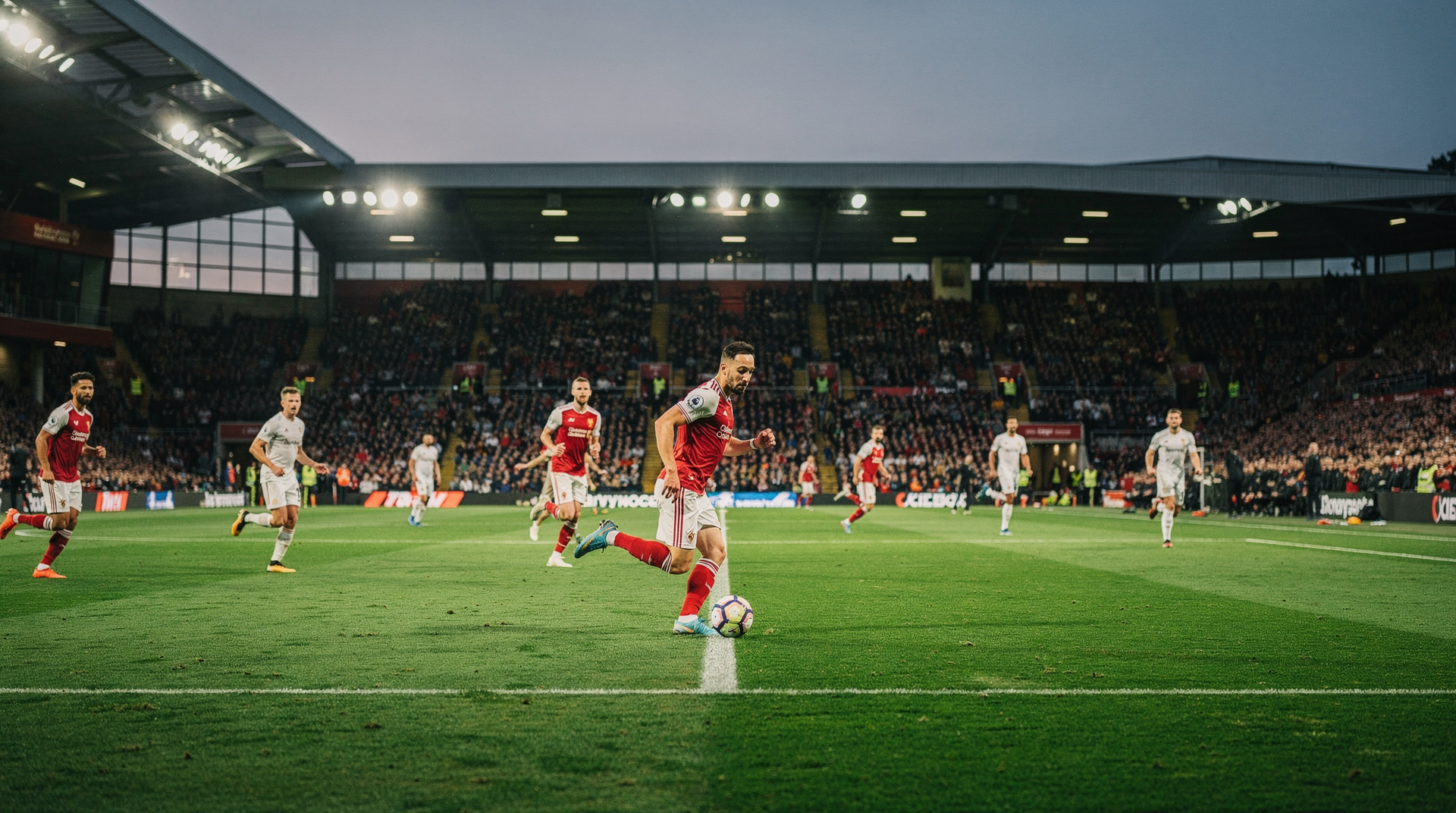
Ask any fan what they remember a month after a major tournament, and they won’t recite the final scoreline. They’ll describe the moment the whole run shifted — a tactical switch no one saw coming, a substitute who changed the temperature, or a single passage of play where the narrative snapped from doubt into belief. That’s the territory a genuine tournament feature occupies. It doesn’t just log results; it reconstructs the campaign as a coherent, evidence-backed story. For a UK readership that has grown up on sharp punditry and long-form sportswriting, the most valuable piece is the one that turns a bracket, a draw, or a sequence of matches into a clear, layered explanation — not a scrapbook, but a map.
What a “whole run” tournament feature actually is
A whole-run feature is a tournament article that traces the full arc of a team’s or athlete’s campaign, from the first flicker of momentum to the decisive moment that defined the finish. It goes beyond match reports by connecting results, tactics, psychology, scheduling, injuries, and opposition quality into one coherent narrative. The best version answers the question readers often ask after the final whistle: how did this run really happen?
This format matters because tournament coverage can easily become fragmented. One piece covers the opener, another the quarter-final, another the final, and each match lives in isolation. Readers are left with scorelines but not understanding. A whole-run feature stitches the journey together, which is especially important in UK sports coverage where fans want both the emotional storyline and the practical detail behind it — the press triggers, the bench impact, the calendar advantage, and the psychological resilience that turned a collection of fixtures into a campaign with a distinct personality.
The strongest features usually blend three layers: the results, the mechanisms behind them, and the turning points that changed the trajectory. That means they do not just say a side was “in form”; they explain whether that form came from a tactical adjustment, a depth advantage, a favourable bracket, or a player peaking at the right time. In other words, the article becomes a map of the campaign, not a scrapbook of highlights.
| Feature type | Main purpose | Typical weakness | Best use case |
|---|---|---|---|
| Match report | Recounts what happened in one game | No broader context | Immediate post-match coverage |
| Reaction piece | Captures mood and key quotes | Can be too surface-level | Fast turnaround analysis |
| Profile | Focuses on an athlete’s identity and arc | May skip tournament dynamics | Human-interest storytelling |
| Whole-run feature | Explains the entire campaign | Requires planning and synthesis | Finals, deep runs, surprise breakthroughs |
What makes this format especially powerful is timing. If a team has reached a semi-final, lifted a trophy, or delivered an unexpected run, readers are ready for the wider explanation. That is the moment when a tournament feature can become the definitive read on the competition, because it gives shape to events that may otherwise feel chaotic or luck-driven. It’s the difference between a fan remembering a sequence of scores and a fan understanding a campaign’s internal logic.
The questions this feature should answer
A useful way to think about the format is to test whether the article answers the following:
- What was the starting point of the run?
- What changed along the way?
- Which match mattered most, and why?
- Was the run built on control, resilience, or luck?
- Which performance pattern repeated across the tournament?
- What does the run tell us about the team or athlete beyond this event?
These questions keep the article grounded. They also stop the writing from drifting into generic praise, which is one of the most common problems in tournament coverage. When a feature can answer each of them with concrete, observable evidence, it moves from recap to analysis — and that’s where the real value sits for a reader who already knows the result.
How to build the narrative so it feels like one continuous journey
A strong tournament feature should move in a clear sequence: setup, development, pivot point, and resolution. The opening should establish the stakes and the shape of the run, the middle should show how the campaign evolved, and the later sections should explain the moment the story locked into place. This structure makes the piece easy to follow while still allowing room for tactical detail and human texture.
The best narrative spine usually starts before the tournament itself. That might mean preseason doubts, form coming into the event, a difficult draw, or a player returning from injury. Those details matter because they create contrast. A run feels bigger when readers understand what was expected at the start and how far reality moved from that expectation. In a UK context, where squad depth and fixture congestion are regular talking points, these pre-tournament signals often become the first layer of the story.
From there, the article should track the campaign in phases rather than in every single match. That is the key difference between an analysis piece and a standard recap. Instead of retelling all six games in equal detail, the feature might group them into early control, a middle-stage wobble, and a late surge. This keeps the piece readable and allows the writer to highlight momentum shifts instead of drowning the reader in chronology.
One practical approach — one I’ve used repeatedly in the newsroom — is to identify the turning-point match, then work backwards and forwards from it. That match is not always the final. Sometimes it is a group-stage recovery, a tactical switch in the last 20 minutes, or a quarter-final where a coach changed shape and unlocked the campaign. Once that pivot is identified, the rest of the article can explain how it altered confidence, opponent preparation, or squad selection. The narrative suddenly has a centre of gravity.
| Narrative block | What it should do | What to avoid |
|---|---|---|
| Opening setup | Establish stakes, context, and expectations | Starting with a flat chronology |
| Early phase | Show how the run began | Listing results without meaning |
| Turning point | Identify the decisive shift | Treating every match as equally important |
| Final phase | Explain how momentum was sustained | Turning the ending into pure celebration |
| Closing insight | State what the run reveals overall | Ending with a generic summary |
A useful editorial trick is to use each section to answer a different “why”. Why did the team start well? Why did the pressure increase? Why did they survive the difficult stretch? Why did the final stage look controlled rather than frantic? Each answer adds another layer to the run, and together they create a narrative readers can actually remember — one that feels inevitable only after the fact, which is exactly the mark of good explanatory journalism.
Where UK sports readers expect the detail
Readers in the UK tend to expect more than broad emotional framing. They want to know whether the press was organised, whether the bench changed the game, whether scheduling helped or hurt, and whether the opposition was truly strong or simply overhyped. That does not mean the prose has to become technical for its own sake. It means the feature should respect the reader’s intelligence and give them enough evidence to trust the interpretation.
Kicking the article into gear with vivid but specific details helps here. A manager’s adjustment in midfield, a late substitution pattern, or a series of set-piece goals can become the thread that holds the whole story together. Without those specifics, a tournament feature risks reading like a public relations piece — all glow, no guts. With them, it becomes an explanation that a fan can argue about, reference, and remember.
Which details matter most, and which ones can be left out
The most important details are the ones that explain causation, not just chronology. A tournament feature should prioritise tactical changes, injury context, opponent strength, form trends, and pressure moments because these are the factors that usually shape the run. Pure scoreline reporting, by itself, rarely tells the whole story.
This is where many articles go wrong. They either overload the reader with every statistic available or they stay so general that the campaign loses its texture. The right balance is selective depth. Choose the details that prove the argument, and leave out anything that does not move the story forward. That discipline is what makes the piece feel expert rather than bloated.
A practical rule: every data point should earn its place. If a possession number, shot map, or save count does not help explain the campaign, it is probably decorative. On the other hand, if a run has depended on fast starts, late goals, or second-half control, then those patterns deserve explicit attention because they reveal how the team or athlete actually operates under tournament conditions. For instance, if a side scored 70% of its knockout-stage goals after the 75th minute, that’s not a footnote — it’s a window into conditioning, depth, or mental approach.
Common detail types that often strengthen a whole-run feature include:
- Tactical shifts such as formation changes, pressing adjustments, or role changes.
- Momentum markers such as comeback wins, extra-time escapes, or clean-sheet streaks.
- Context clues such as injuries, fixture congestion, travel, or squad rotation.
- Opponent quality so the reader understands whether the run was built against elite or uneven opposition.
- Psychological moments such as resilience after setbacks or composure under pressure.
The mistake to avoid is treating all context as equal. Not every subplot deserves a full paragraph. The strongest articles choose the three or four that genuinely explain the run, then build around them. That is especially useful in tournament coverage, where the temptation is always to include “everything” because every match feels important in the moment. But the piece that tries to say everything usually ends up saying nothing clearly.
A simple way to judge whether a detail belongs
Ask whether the detail helps answer one of these three questions: did it change the outcome, did it change the confidence, or did it change the meaning of the run? If the answer is no, the detail is probably background at best. If the answer is yes, it belongs in the piece.
That filter keeps the article tight. It also makes the writing easier to scan, which matters because readers often come to tournament features with a specific curiosity: they already know the result, and they want the explanation. Give them that quickly, then expand. The best tournament writing respects the reader’s time and intelligence in equal measure.
How to write the opening so it hooks without becoming hype
A strong opening should tell readers what this run was, why it mattered, and what they will understand by the end. It should not waste time on generic scene-setting, and it should not delay the central idea. The first paragraph ought to make a clear promise: this article will explain the campaign, not just describe it.
The opening works best when it contains a tension. That tension might be between expectation and outcome, control and chaos, depth and dependence, or early doubt and late dominance. Once that tension is established, the rest of the feature can resolve it piece by piece. This gives the article shape and gives the reader a reason to keep going.
For example, a tournament feature about a surprise finalist should not begin with “Team X won six matches.” It should begin with the fact that nobody expected them to reach this stage, then explain how they rewrote the script. A feature about a favourite that eventually won should open with the pressure of expectation and then show how the side handled it. Same format, different emotional direction. The opening sets the lens through which every subsequent detail is viewed.
A useful opening formula looks like this:
- State the central narrative in one sentence.
- Identify the main pressure, surprise, or shift.
- Hint at the decisive factor that will be explained later.
- Keep the language precise and active.
That structure gives the reader an immediate sense of relevance. It also aligns neatly with tournament coverage best practice: lead with the core insight, then support it with evidence. The article feels confident because it knows what it is trying to say.
When writing for a UK sports audience, it helps to avoid inflated language unless the performance truly justifies it. Phrases like “historic,” “unstoppable,” or “masterclass” can work, but only if the evidence is strong. Otherwise, they flatten the article into cliché. A cleaner, sharper line often has more authority — and it earns the reader’s trust for the paragraphs that follow.
How to balance tactics, emotion, and evidence
The best whole-run feature uses three registers at once: what happened, how it happened, and what it meant. That balance is what makes the piece feel complete. If the article has only emotion, it becomes puffery. If it has only tactics, it can read like a scouting report. If it has only evidence, it may feel cold and incomplete.
A practical way to maintain that balance is to pair every major claim with an observable example. If the article says a side became more efficient after the group stage, show how the chance quality changed or how the shot profile shifted. If it says a player carried the run, show the moments where that influence was visible — the pass before the pass, the interception that sparked a transition, the calm in a 50-50 duel. If it says the team became calmer under pressure, point to the specific game state where that calm showed up. This approach matters because tournament narratives often get distorted by hindsight. Once a competition is over, people naturally smooth the rough edges and overstate inevitability. Good journalism resists that temptation. It shows that the run was built in stages and that the outcome was never fully guaranteed. That makes the article more credible and, frankly, more interesting.
A second balancing trick is to alternate wide-angle and close-up paragraphs. One paragraph can explain the campaign trend; the next can zoom in on a crucial passage of play. This rhythm keeps the article lively and prevents repetition. It also mirrors how readers process sport: they want both the large arc and the specific moments that lodged in memory. For live and evergreen tournament coverage alike, this method pays off because it creates articles with staying power. A straight match recap is useful for a day. A well-built run feature can remain relevant long after the trophy lift because it explains why the campaign mattered in the first place.
Common mistakes that weaken tournament features
Many tournament features fail for the same reasons: they confuse length with depth, they overstate the obvious, or they neglect the middle of the story. A strong campaign feature needs a clear thesis, a disciplined structure, and enough context to support its argument. Without that, even a dramatic run can feel strangely flat.
One frequent problem is over-reliance on the final result. The final is important, but it is rarely enough on its own. A feature that treats the final as the whole story usually misses the preparation, the turning point, and the pressure that made the ending meaningful. Another common issue is writing every match as if it were equally decisive. In reality, most runs turn on one or two matches more than the others — and a writer’s job is to identify those hinges.
A third mistake is failing to translate analysis into plain English. Tactical language has its place, but readers do not need to see jargon piled up for its own sake. If a team changed its pressing triggers, explain what that meant in practical terms: where the pressure began, what mistakes it forced, and how it altered the flow. That is more useful than jargon alone and far more readable.
Other errors to avoid include:
- Repeating the same point in slightly different wording.
- Overloading the piece with stats that do not prove the central claim.
- Ignoring the opposition and making the run seem easier than it was.
- Skipping the emotional stakes that made the campaign memorable.
- Ending with a vague line that says nothing new.
The cleanest tournament features are usually edited hard. They keep only the details that strengthen the story and cut the rest. That editing discipline is especially important in UK sports writing, where readers are used to sharp, informed coverage and will notice when a piece is padded. A feature that earns its length is a feature that earns its audience.
A quick editing test before publication
Read each paragraph and ask: does this move the campaign story forward? If it does not, it either needs sharper evidence or it needs to go. That simple test often improves a feature more than any stylistic tweak. It forces the writer to confront whether every section is pulling its weight in the larger narrative.
How to turn a good feature into a strong one
A strong tournament feature is built on a clear thesis, selective detail, and a confident narrative line. It explains the run in a way that feels inevitable only after the fact, which is exactly what makes it satisfying to read. The goal is not to dramatise everything; it is to show the logic of the campaign in a way readers can follow and trust.
In practice, that means working from the inside out: begin with the central interpretation, then choose the evidence that best proves it. Keep the structure simple enough to scan, but rich enough to reward careful reading. Use the tournament itself as the spine, and then layer in tactics, context, and human consequence. That combination gives the feature both clarity and depth.
For PrimeView Chronicle’s audience, the ideal piece is one that explains the whole run without flattening it into a result column. It should read like the story behind the story: a thoughtful account of how a campaign really unfolded, why it mattered, and what it revealed about the people involved. When that balance is right, the feature becomes more than tournament coverage. It becomes the article readers remember after the bracket is forgotten — the one they send to a friend with the note, “This is what actually happened.”
FAQ
What makes a tournament feature different from a match report?
A tournament feature explains the full campaign, not just one game. It connects results, turning points, and context into a single narrative. A match report tells you what happened in 90 minutes; a whole-run feature tells you why those 90 minutes mattered in the context of a month-long journey.
How long should the feature focus on each match?
Only the matches that changed the run deserve major space. The rest should be used as supporting evidence, not treated equally. If you give every fixture the same weight, you lose the shape of the campaign — and the reader loses the thread.
Should the final always be the centre of the article?
No. The final matters, but the decisive moment may have happened earlier — a tactical switch in the group stage, a penalty save in the quarters, or a substitution that unlocked a system. The best feature identifies the true pivot point and builds the story around it.
Can a whole-run feature work for individual athletes as well as teams?
Yes. It works very well for athletes in tennis, boxing, athletics, and other tournaments where form, pressure, and momentum shape the outcome. The same principles apply: trace the arc, identify the turning point, and explain what changed.
What is the biggest writing mistake to avoid?
Turning the piece into a list of results. Readers want an explanation of why the run happened, not just a sequence of scores. If your feature reads like a glorified results round-up, you’ve missed the entire point of the format.
