Think of the last title race decided on the final day. Now rewind to the moment that really set the course: a ricochet off a defender’s shin in October, a set-piece routine that left a near-post gap in February, or a substitute who changed the tempo eight minutes too late. The Premier League table isn’t a showcase of domination. It’s a 38-round ledger of tiny, repeated details—moments most fans forget by half-time, but which collectively determine whether a season ends in relief, regret, or confetti.
The league table is a cumulative record of tiny events
A fixture list doesn’t hand out points for artistic impression. It records outcomes, and outcomes are a stack of narrow decisions that compound over nine months. A single point earned or squandered in August can look trivial. By spring, that same point may be the sole difference between European travel and mid-table mediocrity—or between safety and the Championship.
That’s the central, sobering truth of modern league football. The Premier League table rewards consistency, but consistency doesn’t mean being wildly superior. It means being slightly sharper in enough small situations that the margins tilt your way. A team can dominate territory, register more shots, and still lose because it converted one fewer critical chance or defended one phase carelessly. The table, then, isn’t purely a merit list; it’s a record of efficiency, timing, resilience, and the clarity of decision-making under duress.
The competitive density of the league heightens this. Even between clubs with starkly different budgets, matches are frequently decided not by sustained class but by a single slip, a single flash of quality. Anyone who watches only the scorelines misses the story. The league table is essentially a running total of who managed their small moments better.
| Fine margin | What it changes in a match | Why it matters over a season |
|---|---|---|
| Chance conversion | Decides whether a balanced contest ends in three points, one, or none | Multiple points swing across a campaign—often the gap between Europe and mid-table |
| Set-piece defending | Prevents cheap goals that bypass the open-play structure | Protects outcomes in matches where the flow is otherwise even |
| Substitution timing | Alters energy levels, pressing intensity, and match control | Decides late points in fixtures that were hanging on a single moment |
| Goalkeeper errors | Turns low-probability situations into actual goals against | Can directly sway relegation or Champions League races by a handful of points |
| Game-state management | Helps teams protect leads or chase equalisers without losing shape | Separates disciplined sides from those who leak points from winning positions |
These margins aren’t dramatic; they’re repeatable. A team that concedes one avoidable goal every few matches doesn’t merely look shakier on the highlight reel—it drifts silently down the table. Conversely, a side that grinds out one-goal wins time after time can feel unremarkable week to week, yet its position will look far rosier than the underlying performances might suggest. The table is nothing if not a mirror of small habits, good or bad.
Small tactical choices create large table effects
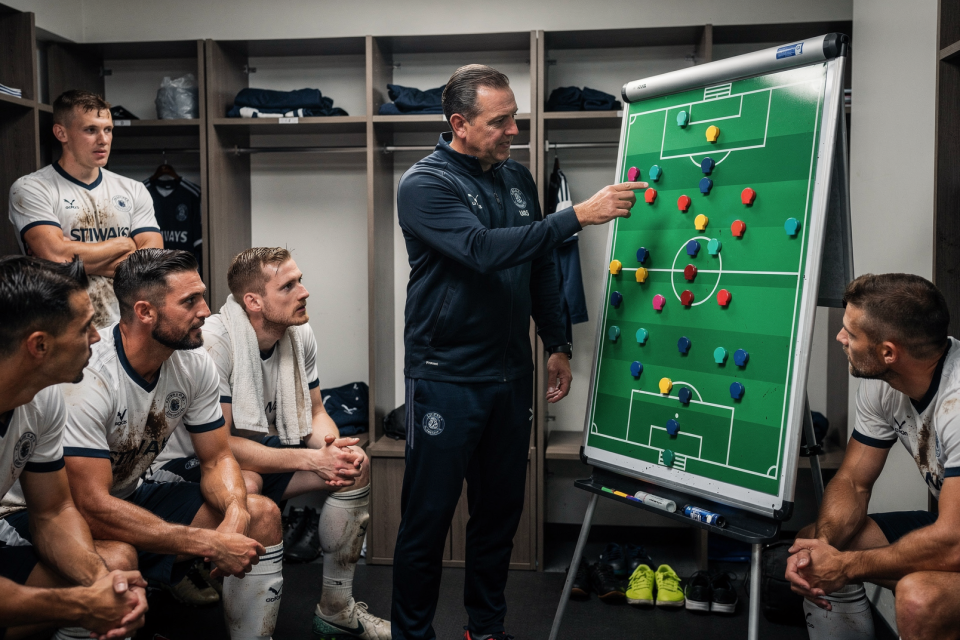
Fine margins in the Premier League table are often rooted in tactical decisions that barely register in broadcast commentary. Pressing triggers, defensive spacing, set-piece choreography, and substitution patterns matter more than any possession statistic. They shape the quality of chances a team generates and the ease with which it concedes them.
A modern match rarely hinges on one grand tactical epiphany. It turns on a chain of half-hidden advantages: a winger pinning his full-back so the midfield can step higher, a holding player screening a forward passing lane for five consecutive attacks, a centre-back stepping half a yard too early and opening a channel. In isolation, each one looks like a footnote. Together, they determine whether pressure is sustained or whether the whole structure buckles.
This is why you can’t read the table as a simple score of “better football.” Some sides are built to squeeze games, keep lines compact, and hope a single moment decides it. Others intend to dominate territory but are permanently one poor pass away from a broken transition. Both strategies can work over 90 minutes; over 38 fixtures, the more robust system normally triumphs—but only if execution is consistent enough to survive the moments when the plan frays.
The table essentially rewards repeatable advantages. Not one glittering performance, but the capacity to generate a slightly higher chance of winning, every single week. That advantage may come from a meticulously drilled press, a rest defence that doesn’t evaporate, or simply a set-piece routine that produces a headed chance in an otherwise stalemate. The best sides aren’t flawless; they’re simply more reliable in the phases where games are most vulnerable.
| Tactical margin | Visible match effect | Typical table impact |
|---|---|---|
| Pressing coordination | Forces rushed clearances and regains possession in advanced areas | Greater territorial control, more second-phase attacks, more defensive comfort |
| Rest defence | Limits counterattacks the moment possession is lost | Fewer cheap chances from transitions, especially crucial in away matches |
| Set-piece design | Produces high-value chances from dead balls | Extra goals in tight games, turning draws into wins |
| Substitution logic | Adds energy or control at the moment the match tilts | Protects leads, rescues draws, converts draws into late victories |
| Shape management | Dictates where the opponent is allowed to attack | Reduces the volume of dangerous transitions and panic defending |
Set pieces deserve special attention because they’re football’s great equaliser. In a league where organised opponents can lock down open-play avenues, dead balls are often the simplest route to breaking open a tight contest. You don’t need to dominate possession to collect points if you’re consistently threatening from corners and free-kicks. Conversely, a side that leaks cheap goals from restarts will find itself chasing games it never should have let drift. That’s a direct hit to the points tally, one that no amount of fancy build-up can easily repair.
Then there’s the less glamorous art of bench management. The right change on 62 minutes can inject energy or control; the wrong one, or one made five minutes too late, can lose a grip on a match that was still manageable. A head coach who acts too hastily can disrupt a team’s rhythm; one who waits beyond the warning signs sees control slip away. Fine margins live as much on the touchline as they do between the lines.
How clubs can spot these margins before the table exposes them
- Track points won and lost from set pieces. It’s often the earliest diagnostic of whether a team is structurally sound or quietly hemorrhaging chances.
- Compare expected chances with actual points. A large gap signals either a finishing hot streak that will likely cool, or a recurring inefficiency in decisive moments that needs tactical correction.
- Scrutinise the final 20 minutes of matches. Fatigue and substitution quality tend to decide whether a draw stays a draw or becomes a win—or a defeat.
- Measure how often a team scores or concedes after transitions. That figure usually reveals whether the rest defence is functioning or whether the side is consistently vulnerable when possession breaks down.
The practical lesson is straightforward: tactical quality matters most when it generates enough stability to survive tight matches. In the Premier League, that stability often dictates whether the table flatters a team or strips away the pretence.
Psychological pressure and game-state management matter more than the headlines suggest
The fine margins that sculpt the table aren’t just physical or tactical. Psychology, composure, and how a side behaves when the scoreline shifts all play enormous, under-discussed roles. Teams that manage pressure effectively collect more points in tight matches, especially when the state of the game forces rapid, instinctive decisions.
A football match doesn’t stay neutral for long. The first goal redraws the geometry: suddenly one side must chase, the other must protect, and both have to decide whether to stick or twist. The best sides react cleanly. The rest become anxious, overcommit numbers, or lose discipline between the lines. That’s how a balanced contest can unravel into a two-goal swing within minutes—and the table never offers a footnote explaining why.
This is one of the most underappreciated reasons a side can look statistically respectable yet repeatedly stumble in the same patterns: after conceding first, after taking the lead, after surviving an hour of pressure. When those collapses persist across months, they’re not random. They signal a deeper issue with emotional control, on-pitch communication, or tactical clarity under shifting circumstances.
Late goals carry an almost disproportionate weight for exactly this reason. A stoppage-time equaliser doesn’t just rescue a point—it can alter the mood of the dressing room, validate a manager’s approach, and re-set the psychological trajectory for the next fixture. By the same token, conceding late can leave a scar that lingers, sapping belief and prompting rash decisions. In a long campaign, psychological ripples turn into points dropped.
Common game-state failures include:
- Panicking after conceding first and abandoning the original structure too early, turning a recoverable moment into chaos.
- Sitting far too deep after going ahead, inviting wave after wave of pressure until the dam inevitably breaks.
- Losing concentration immediately after a substitution, especially if the incoming player is still mentally adjusting to the defensive shape.
- Forcing low-probability attacks when the sensible move would be to reset possession, slow the tempo, and wait for a better opening.
The best sides don’t magic these situations away; they navigate them with more clarity. They know when to slow the game to a crawl, when to punch a direct pass into space, and when to accept a five-minute messy period without letting it become a crisis. From the stands, that kind of competence can look pedestrian. On the table, it’s pure gold.
Take the familiar contrast between a team that tends to “hang on” and a team that systematically closes a match out. Both may win by a single goal. But the first does it with visible strain, lurching from clearance to clearance. The second does it by controlling where the danger happens—keeping play in areas that don’t hurt. Over a season, the latter profile is far more sustainable, because the same behaviours that protect a lead also reduce the chances of dropping points from winning positions in the first place.
Why data often reveals the margin before the table does
The Premier League table is an outcome, but the numbers underneath—expected goals, shot quality, set-piece efficiency, points gained from winning positions—can tell you whether a position is built on rock or sand. Underlying data exposes whether a club is thriving through sustainable processes or merely riding short-term variance, and that distinction matters enormously.
A side sitting higher than its performances suggest may be propped up by elite finishing, a goalkeeper overperforming his expected saves, or an unusually kind run in one-goal games. Another club might be performing strongly without the results it deserves, punished by individual errors or an inexplicable finishing drought. The table adjusts over time, but often not quickly enough for managers or fans who need to understand what’s really happening.
The truest value of data isn’t to replace the eye; it’s to sharpen what you’re seeing. If a team repeatedly generates decent chances but fails to score, the problem might be finishing technique, shot selection, or the quality of delivery in the final third. If it concedes the same type of goal from the same defensive shape, the data is almost certainly pointing to a structural flaw. The league table, by then, will have been slow to react, and the damage already done.
| What the table shows | What it may hide | What to check next |
|---|---|---|
| A team is top four | It might be outperforming its actual chance creation | Expected goals, points from one-goal games, late winners |
| A team is bottom half | It could be luckless or wasteful in key moments | Chance quality, late goals conceded, set-piece record |
| A team has a poor goal difference | It might be collapsing after conceding first | Game-state splits, defensive transition numbers |
| A team wins many narrow matches | It may be exceptionally good at game management | Defensive structure under pressure, bench impact, set-piece output |
But data demands careful reading. Not every overperformance is a mirage. A team can genuinely be outstanding at the precise skills the table rewards: finishing with clinical precision, defending its own box with physicality and organisation, handling pressure without losing shape. In those cases, the numbers don’t contradict the standings; they explain why the side is effective. Between the raw table and the performance indicators, the truth typically resides somewhere in the middle. The table matters because points are the only currency that ultimately counts. But to understand why a team is where it is, you have to look at the tiny mechanisms that manufactured those points.
What supporters, analysts, and clubs should look for next
The most useful way to read a Premier League table isn’t to ask who’s above whom, but which fine margins are driving each position. The clubs that rise and fall most steeply are usually the ones living too close to the edge in one or two vital areas—and they rarely recognise it until the edge gives way.
For supporters, this means learning to watch beyond the final score. A narrow win can be a warning if it relied on an unsustainable number of desperate saves or a freak deflection. A narrow defeat can be far less alarming if the team controlled large portions of the match and simply misfired in front of goal. For analysts, the assignment is to separate one-off noise from repeatable weakness—to distinguish a bad day from a broken process. For clubs, the task is to identify which small fixes yield the largest return, because not every flaw is equally expensive in points.
A practical checklist, then:
- Test a team’s strength in both boxes. Finishing and defending are the two areas that move the table fastest; a side that is reliable in its own penalty area and efficient in the opponent’s will almost always overperform expectations.
- Review whether late-game shape holds up under pressure. Fatigue and concentration errors are merciless in the final 15 minutes; teams that fold consistently there will leak points regardless of overall quality.
- Measure set-piece efficiency at both ends. Dead-ball situations remain one of the most reliable sources of hidden points—and hidden losses—across a season.
- Look at the bench contribution. Substitution quality, timing, and tactical fit can quietly separate two otherwise similar sides over 38 matches.
The Premier League loves grand narratives: title charges, relegation sagas, managerial comings and goings, individual genius. Yet beneath those storylines sits a more practical, less glamorous truth. The table is typically decided by small habits repeated well, or by small mistakes repeated too often. That’s why the most thrilling season still boils down to basic football truths executed under mounting pressure.
If a club genuinely wants to climb the standings, searching for a single dramatic fix is almost always the wrong approach. The smarter path is to improve a handful of narrow, winnable moments: a better corner routine that yields three more goals, a cleaner rest defence that prevents five late heartbreaks, a calmer final 15 minutes in leads, a sharper use of the bench. Those adjustments don’t always produce highlight-reel drama, but they quietly convert draws into wins and defeats into draws. In a league as brutally balanced as the Premier League, fine margins aren’t a cliché. They’re the mechanism. The table reflects them because, at this level, small advantages compound into unbridgeable gaps. And most people notice them only after the final whistle has gone.