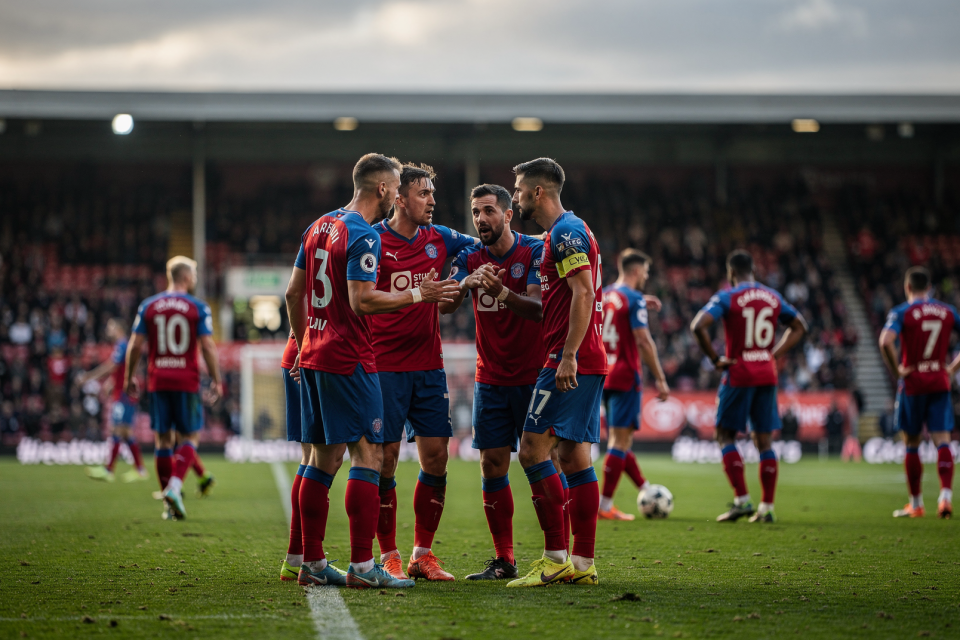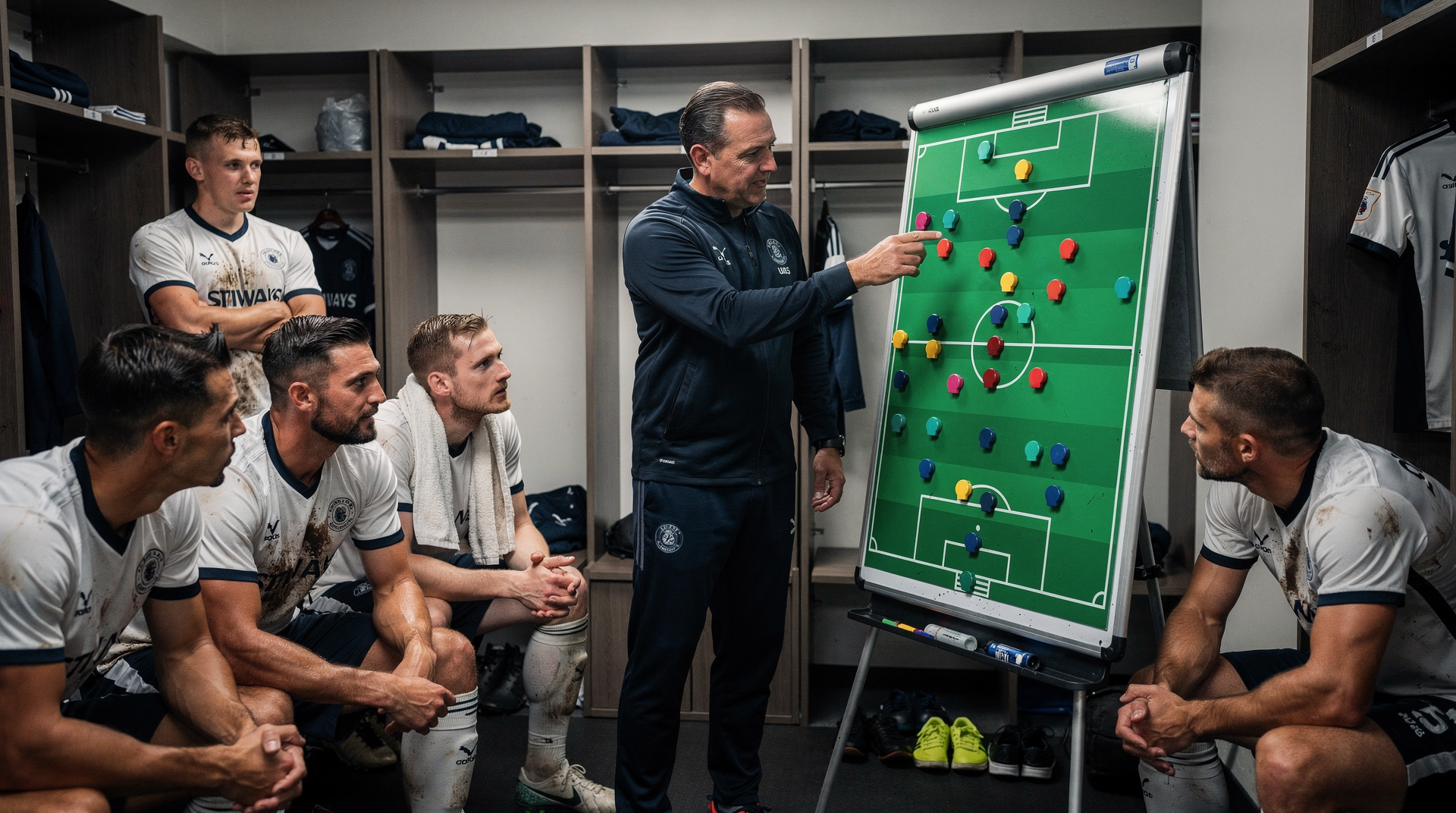
Last night’s comeback wasn’t built on luck, a sudden shift in momentum, or some rousing half-time oratory. It was constructed through small, repeatable tactical corrections: sharper pressing angles, cleaner rest defence, and a more deliberate exploitation of space once the opposition began to drop their intensity. These are the details that separate a genuine structural turnaround from a desperate scramble that happens to work.
Why the comeback started before the scoreline turned
The comeback began long before the equaliser arrived, because the team changed the *conditions* of the match rather than simply chasing the ball. In practical terms, that meant slowing the opponent’s transitions, creating more time on the ball in midfield, and forcing the defensive block to keep shifting until gaps appeared.
The first thing to understand is that most late comebacks are not caused by one dramatic switch. They are usually the product of three or four adjustments that compound over time. In this match, the side that came from behind stopped being stretched in central areas, moved the ball with greater purpose into the half-spaces, and used the full width of the pitch more aggressively. That combination made the opposition defend longer phases, which is where fatigue and errors begin to show. When a block has to slide from side to side for five or six consecutive passes rather than two or three, the mental load increases sharply — and with it, the likelihood of a defender stepping out a fraction too late or a midfielder losing his runner.
A useful way to read any comeback is to ask three questions:
– Did the trailing team improve *territorial control*?
– Did they create better *rest defence* to stop counters?
– Did they force the opponent’s shape to keep changing?
Those questions matter because comebacks are rarely just about “going forward more”. They are about making the match uncomfortable for the team in front. Once that discomfort grows, the defensive line starts to retreat, the midfield line becomes less compact, and the spaces between the units become easier to attack. You can see this in the body language of defenders who suddenly find themselves facing their own goal more often than they’d like.
| Tactical factor | What changed | Why it mattered |
|---|---|---|
| Pressing structure | The front line pressed on clearer cues, not randomly | It prevented easy exits and pinned the opponent deeper |
| Build-up shape | The midfield offered better angles and third-man options | It helped the team progress through pressure instead of forcing hopeful balls |
| Width and spacing | Wingers stayed wider and full-backs joined at the right moments | It stretched the block and created access to the box |
| Defensive rest shape | Two or three players stayed connected behind attacks | It reduced the danger of being caught on the break |
There is also a psychological layer, but it should never be the starting point of analysis. The visible confidence usually follows from tactical clarity. When players know where the next pass is meant to go, their body language changes. When they know the press has support behind it, they engage more aggressively. That is why the best comebacks often look emotional on the surface but structural underneath. The roaring crowd sees passion; the trained eye sees a midfield three that has finally sorted out its spacing.
The pressing tweak that changed the tempo
The most important adjustment was the press, because it decided where the match was played. Instead of chasing every touch, the team narrowed the opponent’s options and pressed on predictable triggers, which made the ball recoveries more useful and the opposition’s build-up more rushed.
That distinction is crucial. A chaotic press can create energy without control; a structured press creates territory. In this game, the press became more coordinated after the break. The first line of pressure curved its runs to block the central pass, while the nearest midfielder stepped up at the right moment rather than arriving late. That simple timing change forced the opponent wide, where the attacking side could trap them against the touchline. It’s a classic trap: show the full-back the line, then collapse on him with two players while the rest of the unit shifts to cut off the easy inside ball.
The result was not just recoveries, but recoveries in useful areas. Winning the ball back near the box is far more dangerous than winning it in your own half because the opponent has less time to reset. From there, even one or two direct passes can turn a turnover into a chance. The geometry changes completely when you’re regaining possession 30 yards from goal rather than 70.
A few practical signs usually tell you a press has improved:
– The opponent starts playing longer clearances instead of controlled passes.
– Midfielders begin receiving the ball with their back turned more often.
– Full-backs are forced into earlier decisions because the wide pass is no longer free.
– The ball repeatedly returns to the same under-pressure defender.
That is exactly why pressing is not only about intensity. It is about *where* pressure arrives and *what* options it removes. In this match, the pressing angles were the real story. Once the opposition could no longer connect the first pass cleanly into midfield, the game became stretched vertically, and that suited the side chasing the result. A stretched game means more one-on-one duels in space, and that favours the team with momentum and fresher legs in the key areas.
Another nuance is that the press only works if the team behind it is prepared to hold its line. If the back four retreats too early, the press becomes isolated and the opponent can simply play around it. The comeback team solved that by keeping the distances compact. Between the front line and the defensive line, there was enough connection to support second balls without opening the centre. That is often the difference between pressure that looks impressive and pressure that actually changes the match. I’ve seen too many sides press with fury for 15 minutes, win applause, and concede because the distance between their lines was a gaping 40 yards.
How the attacking shape opened the decisive spaces
The attacking shape shifted the game by creating overloads in the channels between the opponent’s full-back and centre-back. Once those pockets opened, the trailing team stopped attacking from predictable lanes and began arriving in the box from better angles.
At its simplest, a comeback needs entries into dangerous areas. But not all entries are equal. Repeated wide crosses from static positions are easier to defend than cut-backs from the byline or passes into the inside channel before the back line is set. Last night, the attacking side began to exploit exactly those inside-to-outside movements. The difference between a floated cross from 35 yards and a driven cut-back from the byline is the difference between a centre-back heading clear comfortably and one scrambling to face his own goal.
The most effective pattern was a rotation between the winger, full-back, and nearest central midfielder. One player held width, another dropped to receive, and a third attacked the vacated space. That movement forced the defender to choose between stepping out or staying connected. Either choice created a weakness. If the full-back stepped out, the channel behind him opened. If he held position, the receiving player had time to turn and drive forward. It’s a no-win scenario when executed at tempo, and the best attacking sides drill these rotations until they become instinctive.
This is where *half-space occupation* becomes so important. The half-spaces are the zones between the middle and wide channels, and they are awkward for defenders because they do not belong neatly to either the centre-back or full-back. A team that uses them well can create shooting lanes, through-ball opportunities, and cut-back chances without needing to force the issue centrally. Defenders hate ambiguity, and the half-space is ambiguity made tactical.
The comeback also depended on patience. Quick attacks matter, but only if the team has already moved the block out of shape. Otherwise, speed just hands the ball back. Here, the side in front of the crowd of noise and pressure benefited from being methodical before becoming direct. They recycled possession when needed, switched play when the block shifted too far, and then accelerated once the opponent’s spacing broke down. That patience is hard to maintain when the clock is ticking and the crowd is urging every pass forward, but it’s what separates the professionals from the panicked.
| Attacking pattern | Tactical purpose | Typical payoff |
|---|---|---|
| Wide overload | Drag the block sideways | Space opens inside or at the back post |
| Half-space run | Attack the gap between defenders | Better lane for through balls or shots |
| Third-man combination | Beat the first line of pressure | Cleaner access to the final third |
| Cut-back from the byline | Create high-quality central chances | Better shot locations than floated crosses |
A common mistake in comeback analysis is to credit “increased pressure” without explaining the route to chance creation. Pressure alone does not score goals. What matters is whether the team can turn that pressure into *structured entries* into the penalty area. The decisive moments last night came from movement that dragged defenders, not from hopeful volume. I’ve watched matches where a team puts in 30 crosses and creates nothing of note; last night was the opposite — fewer entries, but each one carried genuine threat.
Between the lines, the team’s advanced midfielder also played a quietly important role. By receiving on the half-turn and connecting play quickly, he stopped the opponent from settling into a static block. That meant the defending side could not simply collapse around the ball. It had to keep tracking runners and adjusting reference points, which is draining over 90 minutes. The player who does this well rarely makes the highlights package, but his teammates know exactly how much he simplifies their decisions.
Why the winner came from game-state management, not just momentum
The late winner was a consequence of how the team managed the game state once they had levelled it. After the equaliser, they did not abandon structure in search of a second emotional surge; they kept the opponent pinned, protected against transition, and waited for the next imbalance.
This is the part of a comeback that gets overlooked most often. Many teams can play well for 10 minutes after scoring. Far fewer can handle the 10 minutes after that. The danger is always the same: the side that has just equalised becomes impatient, pushes too many players forward, and offers the opposition one clean break. The better side resists that temptation. I’ve seen it collapse too many times — the euphoria of the equaliser turning into the devastation of a counter-attack goal conceded 90 seconds later.
Last night’s team were disciplined enough to keep their *rest defence* intact. That means they left enough players in sensible positions behind the attack to stop the counter and keep possession alive after a lost duel. Usually, that involved one full-back staying a touch deeper, one central midfielder screening the next pass, and the centre-backs remaining compact rather than splitting too early. It’s not glamorous work, but it’s the scaffolding that allows the attackers to take risks without exposing the entire team.
This mattered because the opponent had already shown that it could threaten in transition. Once a side knows the other team has to chase, the temptation is to sit deep and then spring forward at the first recovery. The winning side denied that rhythm by slowing down the final phase of their own attack when necessary. In simple terms, they didn’t force the last pass when the shape wasn’t ready. That takes real discipline — the kind that’s drilled on the training ground and tested in the most pressurized moments.
The goal itself is usually the most visible event, but the best analytical question is what happened in the three or four sequences before it. Often, you will find:
– a recovered second ball in midfield,
– a switch that moved the block a few yards too far,
– a runner dragging a centre-back out of line,
– a cut-back or low delivery into an area the defence had stopped protecting.
That chain is rarely accidental. It is built by repeated decisions that wear down the opponent’s structure. Once the legs go, the brain goes with them, and defensive communication becomes less precise. A late winner, especially in a comeback, is often the final expression of that fatigue. The centre-back who tracked his man perfectly for 85 minutes suddenly loses him by a yard; the midfielder who was screening passes now arrives a step late. These are not random errors — they’re the cumulative cost of being stretched repeatedly.
There is also a subtle change in risk appetite. When a team believes the equaliser is possible, it starts to take more calculated risks in possession. The passing becomes less conservative, the forward runs more frequent, and the receiving angles more aggressive. If those risks are supported by structure, they create the winner. If not, they collapse into chaos. Last night, the structure held. The risks were taken in the right areas, by the right players, with cover behind them.
What teams and analysts should take from this comeback
The clearest lesson is that comebacks are usually won by improving the *quality* of control, not just the quantity of possession. Teams that want to repeat this kind of recovery need to press with timing, attack the half-spaces intelligently, and protect themselves against the counter even while chasing the game.
For coaching staff, analysts, and even fans reading a match more closely, there are a few repeatable checks that reveal whether a comeback is sustainable or merely emotional. Start with the pressing shape. Is the front line forcing the opponent where you want them, or simply running hard? Then look at spacing between the lines. If the team is too stretched, recoveries will come with no support. Finally, examine where chances are coming from. If the only route is desperate crossing, the comeback is likely to stall. These are the questions I ask myself whenever I sense a shift in a match’s direction.
A practical post-match checklist looks like this:
– Identify the first tactical change after the break.
– Track where the ball recoveries are happening.
– Compare the team’s width before and after the equaliser.
– Check whether the defensive line stayed connected during attacks.
– Note whether the winner came from a planned pattern or a loose moment.
These details matter because they separate repeatable tactical advantage from one-off fortune. A team can win from behind and still have underlying problems. But if the comeback is driven by clear structural changes, it tells you something deeper: the coaching staff found a way to alter the match rather than wait for it to change on its own. That’s the mark of a side with genuine tactical intelligence, not just fighting spirit.
For readers trying to understand games beyond the scoreline, that is the real value of analysis. The headline says the team fought back. The tactical picture explains *how*. In this case, the comeback was built on better pressing triggers, cleaner use of width, smarter half-space occupation, and disciplined game-state management after the equaliser.
The wider takeaway is simple. When a team turns a match around, the decisive moment is usually only the last link in a longer chain. Last night’s comeback win was a reminder that the most important football often happens before the goal, in the spacing, timing, and positioning that make the goal possible in the first place.
FAQ
What is the most important tactical factor in a comeback win?
The most important factor is usually *control of territory and transitions*, because a team cannot sustain pressure or create good chances if it keeps getting exposed on the break. Without that foundation, even the most passionate fightback tends to fizzle into a series of rushed decisions and lost possession.
Why do analysts focus on the half-spaces in comeback matches?
Half-spaces are valuable because they sit between central and wide defensive responsibilities, which makes them harder to defend cleanly and easier to exploit with rotations and runners. Defenders are trained to protect the centre and the wide areas; the half-space falls into a grey zone of uncertain responsibility, and smart attackers know exactly how to punish that hesitation.
Can a comeback happen without a tactical shift?
Yes, but it is less reliable. Pure emotion or individual quality can change a game, but repeated comebacks are usually linked to clearer tactical adjustments in press, shape, or spacing. The difference is between a one-off miracle and a repeatable method — and the best teams build their reputations on the latter.
What should fans look for after half-time?
Fans should watch whether the team presses higher, keeps better distances between lines, and uses wider positions to stretch the opponent. Those signs often show whether the comeback is being built properly, rather than just being a burst of adrenaline that will fade after 10 minutes.