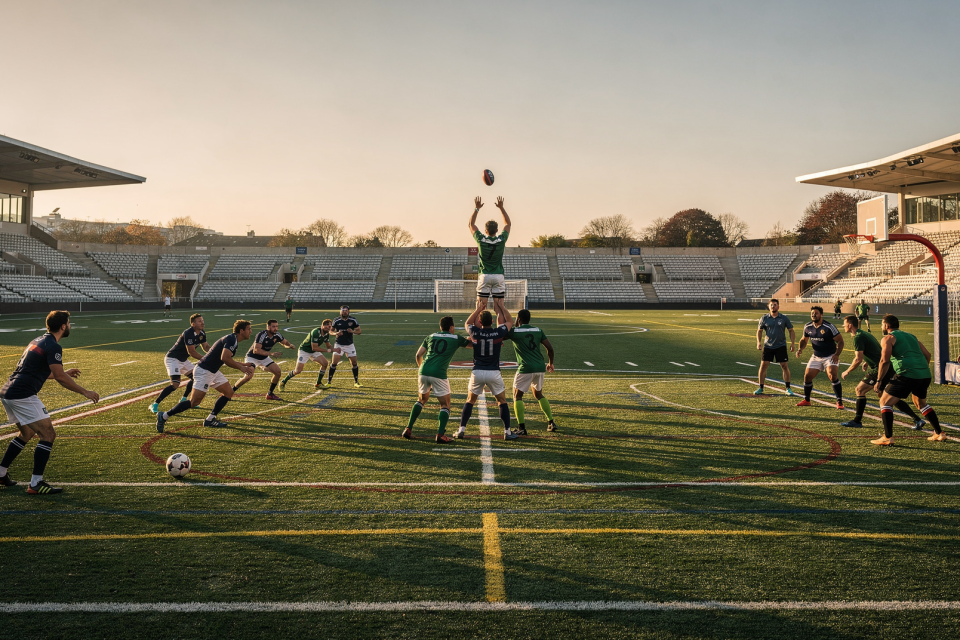
Tournament momentum is real, but it is not magic. It is the changing mix of confidence, pressure, rhythm, and perception that can make one team or athlete look unstoppable for a stretch, then strangely fragile a day later. Anyone who has watched a Wimbledon quarter-final or an FA Cup tie knows the sensation: a single, decisive action sparks a cascade, and an opponent who seemed a monolith moments earlier suddenly begins to fray. That shift is not imaginary — but it is not inevitable either.
Momentum matters because tournaments compress time: there is less room to recover from errors, fewer chances to reset, and more emotional spillover from one round to the next. In a league you can absorb a rough fortnight; in a knockout bracket, one ragged quarter, one loose set, one missed penalty can be the entire story. Understanding how that compression acts on the mind — and on the nervous systems of elite performers — is what separates good tournament analysis from mere score-reading.
What tournament momentum actually is
Tournament momentum is the psychological and competitive lift that makes performance feel easier after a success. It is not a mystical force, and it is not just “confidence” under another name; it is a pattern shaped by results, expectations, pressure, and how players interpret what just happened. Think of it as a story that the mind tells itself, and then acts on — and because the body listens, the story can become self-fulfilling.
In practical terms, momentum shows up when a team starts making quicker decisions, contesting more aggressively, and playing with fewer visible hesitations. A midfielder hits passes before the window closes, without that extra half-second of doubt. In individual sports, it looks like a tennis player serving with freer shoulders after breaking serve, or a runner who settles into a perfect race rhythm after a daring opening split. The important point — and one that continues to divide analysts — is that momentum is often experienced before it is measurable. The data may only catch up minutes later, when shot maps, territory percentages or forced errors tick over, but the performers feel the tide turn earlier. That is why commentators lean on the word so heavily, and why sceptical statisticians push back.
A useful way to think about it is this: momentum is partly performance, partly perception. If a side scores twice in ten minutes, the scoreboard changes the tactical picture, but it also changes the emotional environment. Opponents begin to rush, supporters get louder, and the trailing players start forcing passes, taking low-percentage shots, or abandoning the patterns that kept them solid. Those reactions are tangible, and they directly influence what happens next. In a tournament setting, where every goal feels multiplied, that feedback loop is tighter and more volatile.
Why momentum matters more in tournaments than in league play
Tournament momentum matters more because knock-out formats amplify short-term swings. In a 38-game league season, one poor spell can be absorbed over months, corrected on the training ground, and forgotten after a routine home win. In a cup tie, one bad five-minute patch, one hesitant defensive sequence or a single penalty miss can decide everything. There is no next weekend to make amends.
That compression changes behaviour on the pitch, on the court, and in the dugout. Teams become more risk-aware, but also more emotionally reactive. Coaches shorten rotations, reluctant to trust anyone who is not fully in rhythm. Players protect leads instead of extending them — an instinct that often hands the initiative straight back. One moment of pressure can become a chain reaction, because the stakes are screaming and everyone feels it. Between matches, a narrow win can create the feeling that the squad has “found something” special; a narrow loss can leave the opposite impression, even when the underlying performance metrics barely changed. The dressing room narrative matters, and it can harden into belief or doubt alarmingly quickly.
There is also a scheduling effect that anyone covering a tournament sees repeatedly. Back-to-back matches, travel, compressed rest periods and relentless media attention can make emotional states carry over more powerfully. When a squad wins a tense late-night contest and returns to play just 48 hours later, the memory of surviving can still be present in the muscles: the pace feels manageable, the shots look cleaner, the decisions come without second-guessing. Conversely, a cruel defeat can linger into the next fixture and alter how early mistakes are interpreted. A misplaced pass that would normally be brushed aside suddenly feels like a sign that this is not going to be their night.
| Tournament context | How momentum tends to appear | Typical consequence |
|---|---|---|
| Knock-out rounds | One strong run can change the emotional balance of the entire match | The leading side often plays with more freedom |
| Group stages | Momentum is more gradual and easier to reset | Results matter, but one game rarely defines the campaign |
| Multi-day events | Emotional carryover becomes more visible | Confidence or doubt can persist between fixtures |
| Short-format contests | Every mini-run feels magnified | Momentum swings are sharper and more disruptive |
Between the lines, the key difference is that tournaments reward teams who can absorb momentum shifts without overreacting. A smart side does not try to “feel confident” all the time — that is exhausting and unrealistic. It learns how to stay functional, stick to principles, and execute even when the emotional weather has turned against it. That composure is often the single quality that separates the eventual champions from the ones who looked unstoppable for three rounds and then crashed out.
The psychology behind winning runs and collapse cycles
Winning runs happen because success changes attention, decision-making, and body language. Collapse cycles happen because fear of losing can tighten the same processes that were flowing freely a few minutes earlier. This is not a metaphor — it is a measurable, observable pattern at elite level.
Several mechanisms are usually working at once. First, success reinforces belief. A team that wins a long rally, survives a break point, or scores against the run of play begins to trust its current approach more deeply. That trust reduces hesitation, and speed of thought tends to go up. Second, opponents may become more cautious after conceding, dropping deeper or retreating into a shell, which creates more space for the side on top. Third, the crowd and the broadcast narrative amplify what is happening — and no matter how much athletes are trained to block it out, that atmosphere seeps in. The energy in a stadium can make a two-goal lead feel like a chasm, or a single break feel like a turning point.
The reverse is equally important. Once a team starts worrying about momentum, it can become self-conscious. Instead of reacting instinctively to the game, players start monitoring themselves: am I tense, am I rushing, am I letting the moment get away? That mental monitoring consumes cognitive capacity. In practice, it often leads to overplaying simple situations, choosing safer options too late, or taking the one extra touch that turns a promising move into a turnover. This is where you see a team that was purring suddenly looking laboured, as if operating through treacle.
There is another subtle effect that matters hugely in tournaments: attribution. Teams that win tend to explain the win as evidence that their plan is working perfectly. Teams that lose often explain the loss as proof that they are “off it” or not mentally tough enough. Both interpretations can be misleading, because short-term outcomes do not always reflect underlying quality. But coaches and athletes are human, and meaning matters enormously. The story a team tells itself after a result — we have cracked it or we are fragile — can shape how it practices, how it meets the next challenge, and how it responds when the next pressure wave arrives. The dressing-room narrative can become the truth.
Common psychological triggers of momentum shifts
- A sudden score after a sustained period of pressure — the relief can feel like an injection of energy
- A comeback from 0–1, 0–2, or a similar deficit — the feeling of having escaped can unlock a new level of risk-taking
- A disputed decision that mobilises emotional unity — players who feel wronged sometimes channel that anger into sharper focus
- A timeout, substitution, or tactical change that interrupts the opponent’s rhythm — a disruptive pause can reset a pattern
- Visible body language changes, such as sharper movement or slower recovery after mistakes — when opponents start looking at each other, momentum is already shifting
The list above is not exhaustive, but it captures a useful truth: momentum often starts with an event, then becomes a narrative, then becomes a pattern of behaviour. That is why it can sometimes appear larger than the original trigger, and why astute coaches work to intervene before the narrative takes hold.
How coaches, analysts, and players can manage momentum
The best way to manage momentum is to make it less mysterious. Coaches should build routines that stabilise behaviour, analysts should separate emotional swings from real tactical change, and players should focus on controllables rather than the mood of the scoreboard. When momentum is treated as a concrete problem rather than a mystical force, the tools to address it become clearer.
For coaches, the first job is preparation. If a team has no plan for dealing with a conceded goal, a bad spell, or a hostile crowd, the emotional reaction tends to spread unchecked. Practical routines help enormously: a short reset phrase that snaps attention back to the next action (“next ball”, “process not outcome”), a pre-agreed pressing adjustment to regain control, a deliberate next-play focus, or a substitution pattern designed to calm the match. These are not glamorous tools, but they work because they remove ambiguity. Players stop having to think about what to do and simply execute a rehearsed response. I have seen sides at Premier League level drill these “reset moments” in training so that when the storm hits, the automatic system kicks in before panic does.
For players, the central skill is narrowing attention. Momentum feels enormous when a player keeps looking at the whole problem at once. It shrinks dramatically when the focus returns to the next pass, the next split-second of positioning, or the next defensive action. That is why experienced competitors — your Harry Kanes, your Novak Djokovics — often seem calm during chaos: they are not ignoring momentum; they are shrinking the moment into a task that they can execute. They have trained themselves to ask, “What does this situation demand right now?” rather than “What is the overall mood of this match?”
Analysts can help by asking a different question. Instead of “Has momentum changed?”, the better question is “What changed first?” Was it shot selection, territory, pressing intensity, turnover rate, or body language? In many cases, what people call momentum is actually a chain of smaller tactical and emotional shifts. The team that can identify the first link — the moment when the opponent’s midfield suddenly dropped five yards deeper, or when the return-of-serve winner percentage spiked — suddenly has a pattern they can address rather than a vague feeling they cannot control.
| If the problem is… | Likely mistake | Better response |
|---|---|---|
| Conceding after scoring | Team becomes passive too early | Keep the same pressing and spacing principles for the next phase |
| Missing easy chances | Players chase the next action too urgently | Slow the game down with possession or a reset set-piece |
| Losing composure after a call | Emotional focus moves to the referee or officials | Re-centre on the next defensive or attacking job |
| Repeated late-game drop-off | Fatigue gets mistaken for “mental weakness” | Rotate earlier and simplify late-match decision-making |
A practical coaching rule is simple: do not treat momentum as an abstract force. Treat it as a behaviour problem with emotional components. Once that shift in thinking happens, interventions become clearer, more repeatable, and more coachable. It stops being about inspirational speeches and starts being about prepared systems.
How to read momentum in real time during a tournament
Momentum is easier to spot when you look at patterns rather than isolated highlights. The best indicators are tempo, body language, decision quality, and how often one side forces the other into rushed responses. The roar of a crowd or a fist-pump moment means nothing if it is not followed by sustained sharpness.
In live viewing, start with the pace of decision-making. Are players receiving the ball with calmness, or are they taking the first awkward option because they sense pressure that is not quite there? Is the defending side stepping in earlier, or are they retreating too much and inviting trouble? Is the trailing side still creating clean chances through their usual patterns, or have they abandoned structure and resorted to hopeful long balls or low-percentage attempts? These details matter more than a single burst of noise or a dramatic camera angle. The quiet midfielder who is suddenly being bypassed tells a bigger story than the celebration a minute earlier.
Body language is useful, but only if it is treated as a clue rather than proof. A chest-thump or a shouted celebration does not create momentum by itself — it can even be a performance, a deliberate attempt to project control. What matters is whether it is followed by sharper movement, quicker recovery, and better organisation. The visible emotion must connect to actual performance change; otherwise it is just theatre. I watch for the moment when a team that was second to every loose ball suddenly starts arriving first, or when a full-back who was pinned back starts carrying the ball ten yards further forward. Those signals are more reliable than facial expressions.
For analysts and writers, the challenge is to avoid lazy commentary. Saying “the momentum has shifted” is easy. Explaining why it shifted is where the value lies. Did one team start winning the second balls in midfield? Did their return of serve suddenly become deeper and more troublesome? Did a substitution alter the match-up in a specific channel? Did a defensive block force more low-quality attacks? Those are the questions that turn a feeling into genuine insight — and that insight is what separates good tournament coverage from the highlight-reel summary.
When covering tournaments for a UK audience, the most useful framing is often comparative. Fans understand momentum best when it is placed beside something familiar: a football side surviving a bad five-minute spell after conceding, a tennis player riding through an unstable service game with first-serve percentage plummeting, or a rugby team using territory and set-piece solidity to flip the emotional pressure back onto the opposition. The sport changes, but the psychological mechanics overlap more than most people think. A momentum shift in Twenty20 cricket is felt with the same physiological jolt as one in a Champions League semi-final. Recognise the pattern, and you can read the game before the scoreboard confirms it.
The most common mistakes people make about tournament momentum
The biggest mistake is assuming momentum is permanent. It is not. Momentum can change quickly, and a team that looks completely in control at one stage may be one sequence away from looking vulnerable again. I have seen sides 2–0 up and cruising, concede a scruffy goal from a corner, and spend the next 30 minutes clinging on — not because they lost ability, but because the psychological climate flipped and they could not flip it back.
Another mistake is over-crediting emotion and under-crediting structure. A side often looks “up for it” because the tactical shape is helping it win duels, protect space, or create cleaner transitions. Emotion arises when that platform is solid; it does not create the platform on its own. When a team appears to have momentum, ask where their defensive line is, how their pressing traps are functioning, and whether they are dominating the first three seconds after a turnover. Quite often the “energy” is a by-product of positional smartness, not a magical surge of will.
A third error is reading every hot streak as destiny. In tournaments, short bursts can be real without being predictive. A player may win six straight games because a tactical adjustment worked against one specific opponent, not because they have suddenly become unbeatable. A side may score three goals in 15 minutes because the opponent’s holding midfielder has a dead leg, not because they have an aura. That distinction matters for analysts, coaches, and fans alike. The great trap of tournament psychology is to take a snapshot and draw a portrait.
There is also a media trap. Momentum stories are seductive because they are simple, dramatic, and fit perfectly into captions, highlights packages, and quick post-match summaries. But the best tournament coverage goes one level deeper. It asks whether the run was built on repeatable advantages — such as a pressing system that won the ball high and repeatedly generated clear chances — or whether it was a temporary emotional surge that happened to arrive at the right time, and which will dissolve when a more disciplined opponent shows up. That is the line between fairytale and analysis.
A practical framework for understanding momentum
The most useful framework is to track momentum in three layers: event, response, and repeatability. First, identify what triggered the swing. Second, observe how both sides reacted to it. Third, ask whether the change can be sustained — and for how long. This approach works across sports because it keeps the analysis grounded in observables rather than in myth.
If a side scores and the opponent immediately gets more cautious, that is a classic event-response pattern. If the leading side then begins to control territory or tempo more effectively, the momentum may be repeatable for as long as those conditions remain intact. But if the opponent quickly resets after a timeout or a substitution — maybe the coach has drilled a specific “recovery shape” — the momentum may have been temporary, a flash that dissolved once the system kicked back in. In the 2019 Champions League semi-final, you could see Liverpool’s pressing structure reassert itself after a brief wobble; the momentum Barcelona built lasted only until that structure locked back into place.
The framework also explains why tournaments feel so unpredictable. The emotional energy of a knockout event can be volcanic, but the repeatability of a performance still decides who advances. That is why the strongest teams are not always the ones that look the most emotionally intense on any given night. Often they are the ones that recover best when the emotional curve dips, the ones who do not need to feel invincible in order to be effective. They have methods, not just moods.
For readers trying to judge a tournament properly, the lesson is straightforward: do not stop at the headline moment. Look for the mechanism beneath it. Ask what changed, who adjusted, and whether that adjustment can survive the next wave of pressure. That is where momentum becomes analysis rather than mythology. In the end, tournament momentum is a blend of confidence, pressure, rhythm, and interpretation — all moving faster because the event itself is shorter and less forgiving. The sides that cope best are not the ones that never lose momentum; they are the ones that recognise the shift quickly and respond without panic. They treat momentum not as a force to be worshipped or feared, but as a problem to be solved.
And the deeper lesson is that momentum is real, but it is usable only when it is translated into action. For players, that means narrowing focus and protecting decision quality. For coaches, it means planning resets before they are needed, so that the response is automatic. For analysts and fans, it means reading the match with patience, not just excitement — noticing the patterns that precede the scoreboard, and understanding the game that unfolds beneath the noise.