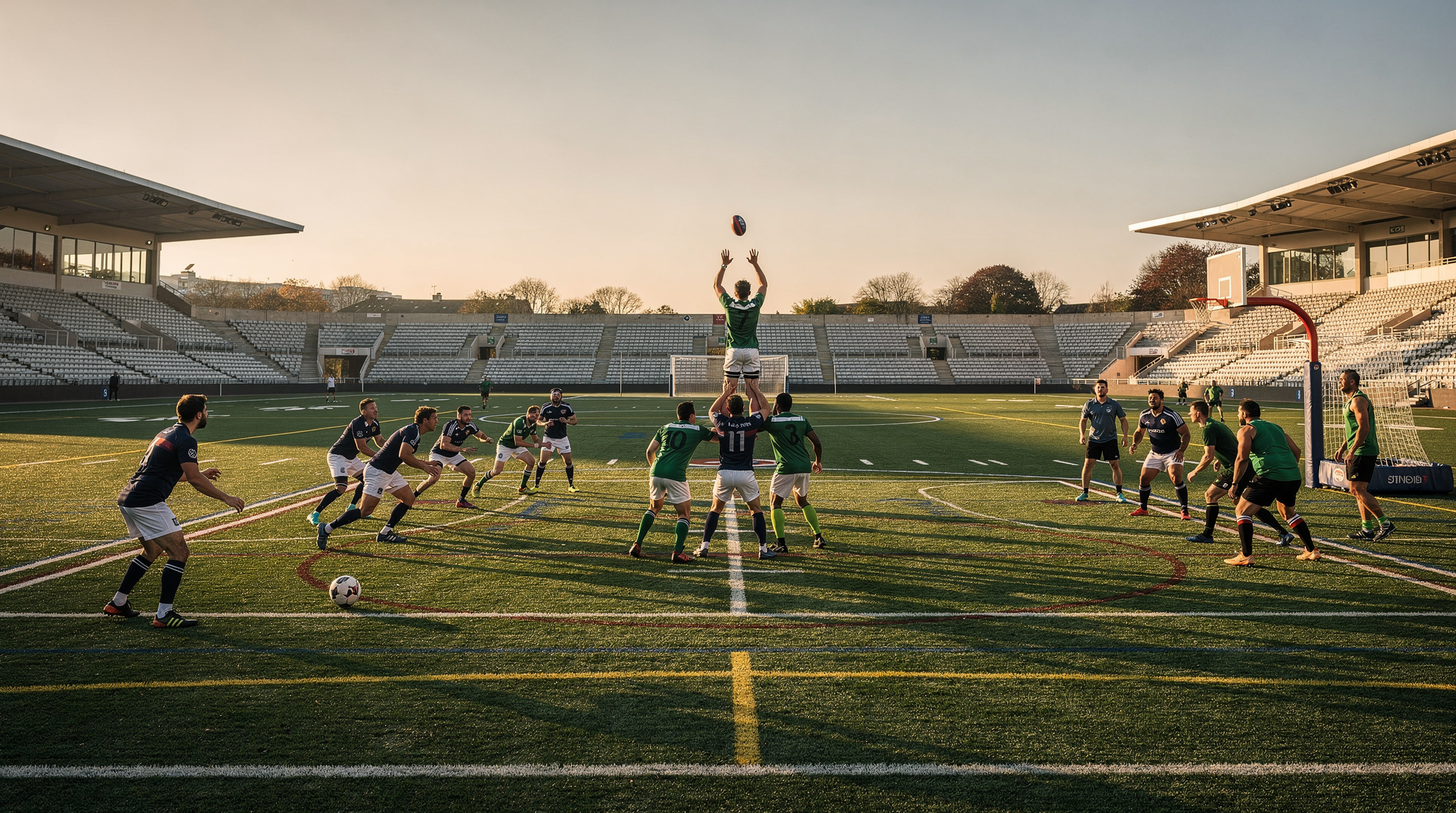
Set-piece innovation has become one of the most reliable ways for teams to win marginal gains across sport, because it turns rehearsed detail into repeatable advantage. From football corners to rugby lineouts, cricket field settings, basketball sideline plays, and even handball restarts, the same principle keeps winning out: small moments, designed well, decide big outcomes.
Why set-piece innovation matters across sport
There is a quiet, almost mechanical truth that runs through every elite dressing room: structured restarts are the one time in a match when planning can genuinely beat chaos. Coaches don’t just value this because it sounds smart in a tactics meeting. They value it because it works, consistently, across sports that otherwise have almost nothing in common.
The logic is disarmingly simple. When play stops, the coaching staff gets a precious, fleeting window to impose order on a situation that is about to restart at speed. In open play, athletes are reacting to movement, space, fatigue, and improvisation all at once. Decision-making is rapid, often subconscious. But a set piece strips away some of that noise. For a few seconds, the attacking team can script the opening sequence, and those first few seconds frequently determine what follows. Get them right, and you manufacture a high-value scoring chance from a moment that looked entirely routine. Get them wrong, and you hand the initiative straight back.
This is why set-piece work has expanded so far beyond the old binaries of “delivery and finishing” or “lift and catch.” Modern coaches now think about timing, disguise, body orientation, blocker runs, decoy movement, opponent scanning habits, and even how a referee’s positioning affects what defenders can see. The most effective routines are rarely the most complicated on a whiteboard. They are the ones that create one clean, unanswerable advantage at the exact moment pressure peaks.
To understand the trend properly, it helps to compare the core objectives across sports. The table below outlines how different disciplines approach the same fundamental problem: turning a restart into a controlled weapon.
| Sport | Main set-piece objective | Typical innovation focus | Common payoff |
|---|---|---|---|
| Football | Create a high-quality shot from a restart | Delivery zones, screens, second balls, dummy runs | Goals from corners and free kicks |
| Rugby | Gain territory or score from restart structures | Lineout variation, maul shape, decoy lifting | Field position, penalties, tries |
| Cricket | Control scoring and dismissals through placement | Field setups, bowling plans, matchups | Wickets, dot balls, pressure |
| Basketball | Generate an efficient shot after dead-ball situations | Misdirection, staggered screens, spacing | Open threes, layups, free throws |
What connects all four sports is not the specific rules or the equipment. It’s the deeper logic of the restart: one team has time to prepare, the other has time to anticipate, and innovation is the art of staying one step less predictable than the opposition. The team that wins this battle repeatedly doesn’t just score points. It plants a seed of doubt in the opponent’s mind that grows with every subsequent restart.
How set-piece innovation works in football, rugby, cricket and basketball
At its heart, set-piece innovation works by creating information asymmetry. The attacking side knows the plan. The defending side must guess. The most effective routines use movement, spacing, and disguise to make that guess as expensive as possible. It sounds almost unfair when you put it like that — and, tactically, it is.
Football remains the clearest example for UK audiences, and the Premier League era has turned corners and indirect free kicks into miniature works of coaching choreography. You rarely see a simple outswinging delivery into a crowd of bodies anymore. Instead, modern corners involve layered routines where attacking players are split into distinct roles: near-post runner, far-post finisher, blocker, rebound hunter, zone disruptor. The objective is not merely to win the header. It is to manipulate the defenders’ attention so completely that one attacker arrives unmarked, or so that the second ball drops precisely into a pre-planned area. Between 2022 and 2026, this trend has only accelerated. Teams now routinely train short-corner variations that drag defenders out of position, rehearse blocking patterns that don’t draw fouls, and practice specific responses to common defensive setups like zonal marking with man-to-man protection in the six-yard box. The detail is meticulous, and the difference between a well-drilled side and one that just hits and hopes is stark.
Rugby applies precisely the same logic but in a different set of contexts: lineouts, scrums, and tap penalties. A lineout, when you strip it back, is a moving puzzle. If the hooker’s throw is accurate and the lift timing is precise to the half-second, the attacking team can choose between a safe possession platform, a rolling maul launch, or a disguised strike play where the fly-half enters the line late. Innovation here often looks subtle from the stands — a slight hesitation from a jumper, a pod that holds its shape a beat longer — but the detail is ruthless. Modern lineout systems use multiple call options that come off the same visual shape, making it nearly impossible for the opposition to read the cue and jump early. And this isn’t just about scoring. In the modern game, lineout design is deeply tied to exit strategy. A clean take and a well-structured maul can flip a side from deep defensive pressure into attacking territory in one phase. That is strategic gold.
Cricket is less instinctively grouped with set-piece thinking, but the overlap is genuine once you look past the surface differences. Every over begins with a structure. Every captain’s field setting is a designed response to the pitch conditions, the batter’s scoring zones, and the bowler’s planned sequence. The innovation here isn’t a choreographed movement sequence in the football sense; it’s the coordination between bowler, wicketkeeper, captain, and fielders to shape risk. An attacking field set with catchers in place can deliberately funnel shots toward a specific zone where a fielder is waiting. A cleverly adjusted defensive field, with men protecting the boundary and squeezing the infield, can compress scoring options just when the batting side is trying to accelerate. In that sense, cricket’s set-piece innovation is about manipulating probabilities rather than manufacturing a single headline moment. It’s less about the spike of a goal and more about the slow, suffocating grind of dots and pressure. But the underlying idea is the same: use a restart to reduce the opponent’s options before they’ve even faced a ball.
Basketball has arguably normalised dead-ball creativity more than any other major sport. Sideline out-of-bounds plays, baseline sets, and late-clock actions are so tightly scripted that they function almost like play-calling in American football. The design principles are clear. Elite coaches use staggered screens to occupy help defenders, false movement to shift attention before the real action cuts in, and precise spacing to open a passing lane or a driving corridor. There is a reason head coaches spend so much time on final possessions. With the clock stopped, every defender can see the court, so the only way to gain an edge is through timing and deception. A good basketball set piece does not just create a shot. It creates a shot that matches both the player profile — a shooter’s rhythm, a roller’s timing — and the specific clock situation. That alignment is what separates a functional play from one that wins a tight game in March.
Looking across the sports, clear patterns emerge in how the best teams design their restarts.
| Design principle | Football | Rugby | Cricket | Basketball |
|---|---|---|---|---|
| Disguise | Dummy runs, hidden blockers | Decoy lifts, multiple call shapes | Field changes, angle changes | False cuts, fake handoffs |
| Space creation | Screening and movement clusters | Pod alignment and maul shaping | Boundary protection gaps | Screen angles and spacing |
| Repeatability | Rehearsed corner routines | Lineout call trees | Bowling plans and fields | Set plays and options |
| Main risk | Overcomplication | Predictable calling | Defensive matchups | Timing breakdown |
The critical lesson here is that innovation does not always mean novelty. Often it means making one familiar action harder to read, harder to defend, and easier to repeat under live pressure. The best sides don’t chase fresh ideas for the sake of a highlight reel. They refine what they already do until the execution looks almost unfair.
What makes a set-piece idea genuinely effective
A set-piece idea is genuinely effective when it creates a measurable, repeatable advantage without becoming fragile under stress. The best routines can survive the pressure of a knockout match, adapt once the opposition scouting report catches up, and still function when the first option is removed or the delivery isn’t perfect. That is a much higher bar than just looking clever on a tactics board.
There is a temptation in all sports to judge innovation by how it looks on video. A coordinated six-man move with dummy runs and a backheel flick feels like progress. But in elite competition, a beautiful routine that fails twice in a row is not innovation. It’s theatre. Real value comes from three things: clarity, timing, and transferability. Clarity means every player understands the trigger moment and knows the fallback route if the initial picture changes. Timing means the key movement happens at the exact instant when defenders are most vulnerable — the moment they commit their weight or their eyes to one threat. Transferability means the core idea works against different defensive shapes, not just the one opponent you designed it for in training on Tuesday.
Another crucial factor is the relationship between novelty and repetition. Set pieces cannot be pure improvisation, because a team has only seconds to execute, and hesitation is fatal. But they also cannot be so rigid and repetitive that opponents solve them by midweek video analysis. The strongest systems use a stable framework with small, rehearsed variations layered on top. In football, that might mean the same starting shape with different runners attacking different delivery zones each time. In rugby, it might mean the same lineout formation with three distinct exit options — maul, front peel, or long strike — called based on the defensive alignment. In basketball, it might mean the same entry action branching into three possible reads depending on how the screen defender reacts. The skeleton stays the same, but the muscle movement shifts.
When I assess whether a set-piece idea is worth the practice time and the risk of running it in a live match, I come back to a short mental checklist built from watching routines succeed and fail across different sports.
- Does it create a clear advantage in space, timing, or matchup?
- Can the team execute it at match speed without hesitation?
- Does it include a second option if the first route is blocked?
- Is the routine different enough to stay unpredictable but simple enough to repeat?
- Does it work against at least two likely defensive responses?
These questions matter because set-piece innovation often fails for painfully predictable reasons. Coaches fall in love with their own design and add too many moving parts, forgetting that fatigue and pressure will strip complexity away. Players hesitate at the trigger moment, because hesitation is a natural human response when you have to remember five cues instead of two. Or worse, the routine only works when the opponent behaves exactly as predicted, collapsing the moment a defender does something unexpected. Some teams become so attached to the visual design of a play that they ignore the outcome. If a routine gets the right tactical reaction on camera but produces no shot, no territory gain, and no sustained pressure, it is decoration. And decoration doesn’t win trophies.
There is also a layer of psychology that often goes under-discussed. Set-piece success can reshape how an entire match feels. A single well-executed restart — a corner that rattles the crossbar, a lineout that drives 15 metres into the 22 — can force defenders deeper, make them hesitate on contact, or push them into conservative, reactive positioning. That pressure compounds over the course of a game. Eventually, the opponent starts defending the possibility of the routine rather than the routine itself. They adjust their assignments, they call time to reorganise, they lose a fraction of trust in their system. That shift between the lines is often where the real edge appears. It is not always visible on a stat sheet, but you can see it in body language and in the way a defence starts to scramble on every restart whether or not the ball is actually coming their way.
How teams develop set-piece innovation in practice
Building genuine set-piece innovation isn’t about stumbling onto one miracle play. It’s about combining video analysis, deliberate repetition, opponent profiling, and honest post-match review into a process that produces small, testable improvements over time. The coaches who do this well treat it as a continuous loop, not a one-off creative burst before a big game.
In strong coaching environments, the work starts with data and observation. Performance analysts map where restarts are already creating value, then they scrutinise opposition patterns for specific weaknesses. Is a football team defending corners with a packed near-post zone but leaving the far-post area vulnerable? Does a rugby side overcommit their back row to the maul and leave space in the 10 channel? Does a basketball opponent overhelp on baseline action, leaving a shooter open on the weak side? These are not vague hunches. They are specific, testable vulnerabilities. Once the weakness is identified, the coaching staff works to answer the central question: can we design a routine that exploits this consistently without becoming so obvious that the opponent adjusts before half-time?
Training design is where the real craft lives. The most reliable set-piece work is built in layers, not presented as a finished product. First comes the base action: the starting positions, the initial movement, the core shape. Then comes the variation layer: a different runner, a changed angle, a short option off the same look, a delayed screen, or a counter-call the team can switch to if the defence overreacts. Finally, and crucially, there is the pressure layer. This is where the routine is rehearsed under conditions that approximate a live match — fatigue, crowd noise, time limits, and active defensive interference. Without that last stage, a set piece can look immaculate on the practice ground and unravel completely the moment a defender does something physical or unexpected. I have seen it happen too many times: a play that scores 10 out of 10 in an empty session turns into a breakdown when the stadium is loud and a centre-back is arriving at pace.
It also helps to think in terms of who is involved. Set-piece innovation is rarely the pet project of one coach working alone in a dark room. Analysts map tendencies and compile video clips. Assistant coaches propose patterns and sketch initial ideas. Technical coaches refine the execution details — footwork, lift mechanics, screening angles, timing beats. And captains or senior players often serve as the final filter, determining what feels usable in real match conditions and what sounds clever but falls apart under pressure. The most effective teams treat set pieces as a shared language across the whole performance staff, not an isolated specialism handed off to one assistant and ignored by everyone else.
For anyone trying to spot whether a team’s set-piece work is genuinely improving — rather than just benefiting from a lucky bounce or two — there is a short set of signals that reliably indicate progress.
- The same starting shape produces multiple outcomes over a series of games.
- Players react instinctively, not cautiously, when the trigger comes.
- Opponents are visibly forced to adjust their defensive assignments during the match.
- The routine remains effective even after it has appeared in scouting reports and on video.
- The team can explain clearly why the idea works, not just that it worked once against a specific opponent.
That last point matters more than it might seem. If no one in the coaching group can articulate the underlying mechanism — why the movement creates space, why the timing beats the defensive response — then the team may have found a lucky pattern rather than a sustainable one. In high-level sport, luck can absolutely win a single moment. A deflection, a slip, a miscommunication. But process is what wins a season. Process is what holds up across 38 league matches, a Six Nations campaign, or a seven-game playoff series.
Common mistakes and how to avoid them
The most frequent mistake in set-piece innovation is almost laughably simple: making the play too complicated for the time available. Coaches fall into this trap across every sport, seduced by the elegance of a multi-phase sequence that works beautifully in a silent training session and then evaporates in the chaos of a live match. A second, equally damaging mistake is copying another team’s routine without adapting it to your own personnel, the specific rules of your competition, or the tactical context you actually face. Borrowing ideas is smart. Copying them wholesale without adaptation is a shortcut to looking amateurish when it counts.
A routine is only ever as good as the players being asked to run it. This sounds obvious, but it is ignored with remarkable regularity. In football, a corner routine designed for a physically dominant aerial side with two towering centre-backs will fail completely if the squad lacks the necessary delivery quality from the taker or the right heading profiles in the box. The idea isn’t flawed in the abstract, but it is flawed for that group of players. In rugby, a lineout built around a 6’9″ jumper with safe hands may collapse if the hooker’s throw is inconsistent under pressure or if the opposition knows to target the lift. In basketball, a play drawn up to free an elite shooter coming off staggered screens is wasted if the roster simply doesn’t have a reliable threat from deep. The design must fit the squad, not the other way around, and adapting intelligently is a skill that separates good coaches from great ones.
Another trap worth spotlighting is over-optimising for the last opponent. In knockout contexts — a Champions League quarter-final or a World Cup elimination game — this can be useful. A targeted routine built to exploit a specific defensive vulnerability can win a tie. But across a long season, that kind of narrow, reactive approach can make a team too brittle, too dependent on a single matchup. The smarter approach by some distance is to build a core set-piece structure that the squad knows inside out, with opponent-specific branches that can be activated without completely dismantling the foundation. Between the two extremes — rigid and reactive — sits the most useful model. Flexible enough to adjust when you spot a specific weakness, stable enough that the players trust it without having to overthink each time a whistle blows.
Communication breakdowns are another consistent source of failure, and they become more damaging the more elaborate the routine gets. The more moving parts a play contains, the more room there is for misreads, late triggers, and players running into each other’s space. This is why elite coaching groups often simplify the language rather than the ambition. Clear, repeatable trigger words. Concise calls that travel cleanly through a loud stadium. Sharp role definition that leaves no ambiguity about who is the first option and who is the decoy. In practice, the team needs to know not just where to run, but why the move matters in the flow of the game and what to do immediately if the first picture disappears. If that understanding isn’t there, the most beautifully drawn play in the notebook will collapse the moment something goes even slightly off-script.
Practical lessons fans and analysts can use
For anyone watching from the stands, the press box, or the sofa, assessing set-piece innovation means training your eye on structure, repeatability, and disguised intent — not just the final outcome. If the same team keeps generating the same defensive reaction across multiple matches, the routine is probably doing useful work even when it doesn’t immediately produce a goal, a try, or an open look. That consistent reaction tells you the design is forcing the opponent into uncomfortable choices.
A good starting point is to focus on the first three seconds after the restart whistle. Who moves first? Who is acting as a decoy rather than a genuine target? Where is the opponent overloading, and which zone are they leaving strangely empty? Which attacker is being ignored by the defensive alignment, and is that by accident or by design? These details reveal the underlying plan more clearly than the final finish ever does. In football, the real story of a corner often starts before the ball is struck — in the positioning, the initial jog that becomes a burst, the blocker who steps a yard wider than expected. In rugby, the decisive moment may be the throw and the split-second decision of the jumper, not the catch itself. In basketball, the success of a sideline out-of-bounds play often hinges on the angle of the first screen and whether it forces a defender to switch, not on the shot that follows 10 seconds later. In cricket, the field changes that happen between deliveries tell you the tactical story before the bowler even begins the run-up.
For commentators, editors, and tactically curious readers, this cross-sport lens is sharp and portable. It encourages you to stop treating restarts as isolated, forgettable events and instead ask a deeper question: what is the team trying to manipulate right now? Which assumption are they hoping the opposition has made? Once you answer that question, the rest of the pattern usually clicks into place. The dummy run isn’t random. The overload isn’t accidental. The hesitation from a defender isn’t just a mistake — it’s often a response forced by good design.
One caution worth carrying into every analysis is this: innovation should never be judged solely by the highlight reel. A set piece that gets shared on social media because it produced a spectacular goal might actually have been poorly designed and saved by individual brilliance. Conversely, a routine that looks unremarkable and only results in a half-chance might have quietly manipulated the defence in a way that will pay off later in the game, or later in the season when the variation is used. The real test of a good set piece is whether it changes the opponent’s behaviour — whether defenders start second-guessing their assignments, whether they drop deeper, whether they stop committing fully to their own triggers. If that happens, the routine has become more than a one-off moment. It has become a tactical weapon that keeps working even when it doesn’t score directly.
The most effective set-piece innovation across every sport I’ve covered follows a single, clean rule: make the simple action difficult to read, make the complex action simple to execute, and make the result repeatable under the kind of pressure that strips away everything but instinct. That principle travels without friction from football to rugby, from cricket to basketball. It is why set pieces remain one of the most revealing windows into modern coaching — not because they always produce highlights, but because they expose how a coaching staff thinks about preparation, information, and the tiny advantages that accumulate over 80, 90, or 100 minutes.
For the teams chasing the next edge, the breakthrough is unlikely to come from inventing something wildly new that no opponent has ever seen. It will come from refining timing, disguise, and decision-making to the point where the routine feels inevitable only after it has already happened. That is the quiet, powerful logic of set-piece innovation. It is also why the smartest sides — in every code — keep investing in details that most spectators notice only when the ball hits the net, crosses the try line, or finds the open shooter’s hands.
FAQ
What is set-piece innovation in sport?
Set-piece innovation is the use of new or improved tactical designs in dead-ball or structured restart situations to gain an advantage through precise timing, disguise, intelligent spacing, and coordinated movement. It is not about complexity for its own sake but about creating a repeatable edge that the opposition struggles to read and defend.
Which sports rely most on set-piece innovation?
Football, rugby, cricket, and basketball all rely heavily on structured restart planning, though the exact form varies significantly. Football and basketball feature frequent, short burst restarts that create immediate scoring chances. Rugby and cricket use set-piece structures that shape territory, pressure, and momentum over longer phases of play.
Why do set pieces matter so much?
They matter because play stops, which gives the attacking team a rare, controlled moment to impose a pre-planned structure on the game. That brief window allows a side to reduce the chaos of open play, create favourable matchups, and manufacture a scoring chance or territorial gain before the opposition can fully organise.
What usually makes a set-piece routine fail?
The most common reasons are overcomplication, hesitation under pressure, a poor fit between the routine and the actual skills of the squad, and predictability — when a routine is used too often without variation and opponents learn to read the triggers before they happen.
How can analysts spot a good set-piece routine?
Look for repeated defensive reactions that suggest the opposition is being manipulated, clear decoy movement that pulls defenders out of position, sharp timing on the trigger action, and the ability of the routine to remain effective even after the opponent has had time to scout it on video. A good routine creates the same advantage consistently, not just as a one-off surprise.