Injury updates do more than change a line-up; they alter the entire weekend fixture picture, from selection calls and tactical plans to betting markets and fan expectations. In the UK game, where schedules are dense and margins are thin, a single fitness bulletin can reshape how a match is priced, previewed, and ultimately played.
Why injury news now matters before the weekend kicks off
Injury news is shaping the weekend fixture list because clubs are forced to plan earlier, rotate more carefully, and communicate more selectively than before. In practical terms, that means the pre-match conversation often starts with availability rather than form, and the biggest tactical questions are decided before the first whistle.
What has changed is not just the volume of injuries, but the speed at which they influence decisions. In the Premier League, the EFL, the women’s game, and even lower-league football, managers now work against compressed calendars, travel demands, and recovery windows that leave little room for optimism. A player who was “50-50” on Thursday can easily become a late omission on Saturday, and that uncertainty ripples through the fixture list.
For supporters, this is why the weekend preview no longer begins with “Who will win?” but with “Who is actually available?” For journalists, it means injury reports have become one of the most reliable early indicators of how a match might unfold. For clubs, it is a selection problem, a tactical problem, and sometimes a strategic problem all at once.
The knock-on effect is especially visible in British football because domestic coverage is so fixture-heavy. Saturday and Sunday preview packages across the UK are built around assumptions of near-full squads, yet those assumptions are increasingly fragile. The result is a weekend schedule shaped as much by medical rooms as by training pitches.
How injury reports change team selection and match strategy
Injury reports affect selection first, then tactics, then the final shape of the fixture list. A missing centre-back changes defensive spacing, an absent winger changes transition threat, and a sidelined striker forces the team to play differently in possession and without it.
At the selection level, managers usually have three broad responses. They can replace like-for-like, which preserves structure but may reduce quality. They can adjust the system to fit the available players, which may improve balance but needs more preparation time. Or they can protect a returning player by naming them on the bench, which keeps options open but may leave the team short of rhythm early in the match.
That decision-making is rarely isolated. If a starting full-back is ruled out, the replacement may be less aggressive going forward, which in turn affects the winger on that side, which then changes how the team progresses the ball. One injury becomes three or four tactical compromises. That is why a weekend fixture list with multiple doubtful players can produce radically different match plans from one week to the next.
The issue becomes even more pronounced when several teams in the same round are dealing with similar problems. If two clubs lose their main forwards, the match often becomes more cautious and more compressed. If both sides are missing key defenders, the contest can open up and become more chaotic. In other words, injury news does not only affect who plays; it shapes the kind of football spectators are likely to see.
| Injury scenario | Likely coaching response | Match effect |
|---|---|---|
| One key attacker absent | Replace like-for-like or use a false nine | Fewer direct runs, more controlled possession |
| First-choice defender unavailable | Reshuffle the back line or switch shape | Greater vulnerability on set pieces and transitions |
| Several midfielders doubtful | Simplify build-up and reduce pressing intensity | Slower tempo and less control in central areas |
| Late fitness test on a star player | Delay final XI and keep contingency options | More uncertainty in previews and market movement |
The most important point is that injury news can be more influential than form over a short weekend window. A team in good rhythm may still be forced into a conservative setup if its best ball-progressing midfielder is missing. Conversely, a side with patchy recent results can look far more dangerous if its front line is suddenly restored.
Why the weekend fixture list is changing around fitness updates
The weekend fixture list changes around injury news because managers, broadcasters, analysts, and supporters all react to the same uncertainty at the same time. Once availability becomes unclear, every layer of the match ecosystem starts adjusting expectations.
The most immediate change happens in pre-match analysis. Preview writing becomes conditional, with phrases like “if fit” and “should be available” dominating the build-up. That is not just journalistic caution; it reflects how unstable line-ups have become. In the UK, where many fixtures are covered in detail before kick-off, a late injury bulletin can force a near-complete rewrite of the story around a match.
There is also a scheduling dimension, especially in cup competitions and crowded domestic weekends. Clubs playing twice in a week often prioritise one fixture over another, and injury news is part of that calculation. If a player is not fully ready, a manager may choose to preserve them for a more important fixture, which changes the perceived strength of one weekend game relative to another. The fixture list itself does not move on paper, but the competitive weight of each match certainly does.
Broadcasters and editors respond too. A game featuring two fully fit attacking sides receives a different kind of preview treatment from a match in which both teams are likely to rotate. That affects headlines, panel debates, and even the order in which matches are discussed. In practice, injury news helps determine which fixtures feel like main-event games and which are treated as problem-solving exercises.
There is a subtler effect as well: the wider public starts to interpret results differently. If a team wins while missing three regular starters, the performance is judged as evidence of depth. If that same team loses with a weakened XI, the result is framed as understandable damage limitation. Injury news does not just alter line-ups; it changes the narrative around the entire weekend.
What fans and analysts should check before the first whistle
The most useful injury information is not the headline itself but the timing, the source, and the context around it. A short update from a manager in a press conference often tells you more than a vague social-media post or a hopeful training-ground clip.
The first thing to check is whether the update came from the club, the manager, or a third-party report. Official club statements are usually more reliable, but they may still be cautious and incomplete. Manager comments can be revealing, especially when they mention “not quite right,” “a late test,” or “managed minutes.” By contrast, early speculation from outside sources may be accurate, but it should not be treated as settled fact until the team news is confirmed.
The second thing is to distinguish between availability and effectiveness. A player may be named in the squad but still be limited. That matters because a returning forward, for example, may not be capable of pressing for 90 minutes or making repeated high-intensity runs. Likewise, a defender back from a knock may be cleared to play but still vulnerable in one-on-one duels or aerial challenges.
The third thing is to read injury news alongside the fixture schedule. A player returning from a minor issue is more likely to be protected if the club has another big match three days later. That is especially relevant in England, where league, cup, and European commitments can collide. A Saturday fixture may therefore be influenced by what looks like a separate Wednesday problem.
Use this simple checklist before the weekend:
- Confirm whether the update is official or speculative.
- Look for language that suggests doubt, restriction, or managed minutes.
- Check whether the player was involved in training sessions.
- Compare the injury bulletin with the club’s upcoming schedule.
- Read whether the injury affects a core tactical role, not just a popular name.
That last point matters more than many fans realise. Losing a widely known player is not always the biggest problem. Losing the squad’s main organiser, first presser, or build-up pivot can change the match far more dramatically, even if the replacement is less famous.
| What the injury news says | What it often really means | Why it matters |
|---|---|---|
| “Doubtful” | A decision is still pending | Expect late changes to the XI |
| “Late fitness test” | The club is waiting on matchday assessment | Bench and tactical plans may shift |
| “Managed minutes” | The player can appear but not fully compete | Substitution timing becomes important |
| “Out for a few weeks” | The team must build without that role | Formation and depth are affected |
How clubs use injury news as part of the weekend narrative
Clubs know injury news is part of the public story, and they manage it carefully. The way a team communicates fitness updates can influence pressure, expectation, and even how opponents prepare for the match.
Some clubs are unusually transparent, especially when they want to set realistic expectations or explain a weakened squad. Others keep things guarded, revealing only what is necessary on matchday. Both approaches are strategic. Too much information can help opponents prepare; too little can frustrate supporters and leave the media filling gaps with guesswork.
This is one reason weekend fixture previews have become more cautious and more layered. A manager might hint that a player has trained “partially,” which can be interpreted in several ways. A club might say someone is “assessed daily,” which technically says little but still tells analysts the situation is fluid. In the modern game, wording is part of the competitive contest.
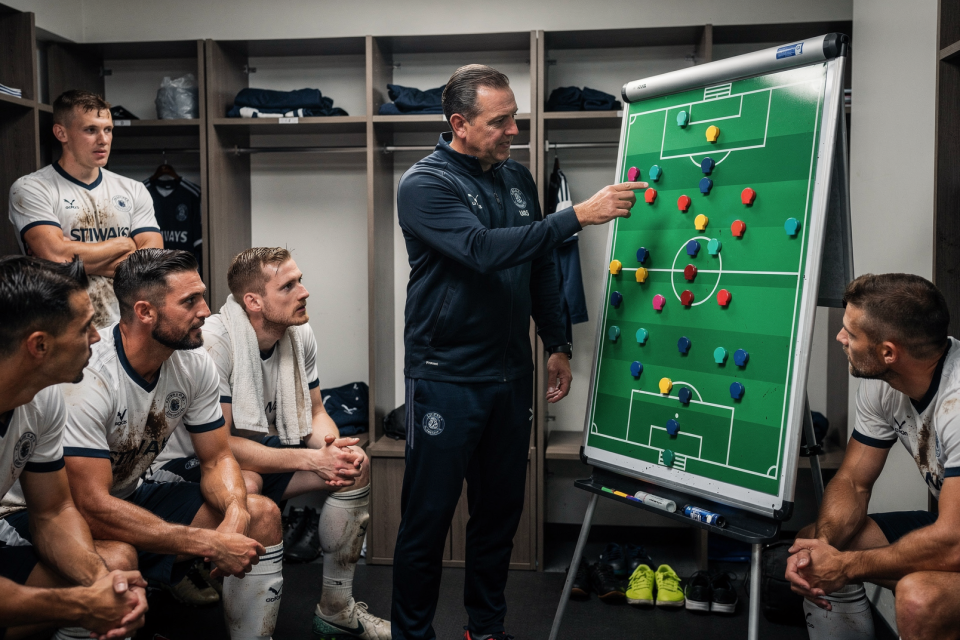
From a tactical perspective, good teams build contingency plans before the press conference even happens. They have one shape for a full-strength XI, another for a restricted forward line, and a third for a late withdrawal in midfield. The best-prepared squads do not just react to injury news; they absorb it into the structure of the weekend plan.
That is why some matches appear to be decided by the Friday bulletin before they are decided by the football itself. A club with a settled back four and a fully available midfield usually enters the weekend with more confidence and cleaner preparation. A club waiting on two or three late calls may spend half the week managing uncertainty rather than refining match details.
The tactical consequences that most previews miss
The biggest tactical impact of injury news is often invisible in the headline team sheet. What changes most is not always the obvious replacement, but the chain reaction behind it.
For example, if a team loses a deep-lying midfielder, the centre-backs may have to carry the ball more often. That can expose them to pressing traps they would normally avoid. If a right winger is unavailable, the team may funnel attacks down the other flank, making the play easier to predict. If the striker is returning from injury and cannot stretch the pitch, the opposing defence can hold a higher line and compress space in midfield.
This matters because weekend fixtures are often decided by small structural advantages rather than dramatic moments. A missing overlap threat can reduce the width of an attack. A half-fit box-to-box midfielder can blunt counter-pressing. A rotated goalkeeper can change the team’s comfort under pressure. These are not headline-grabbing issues, but they heavily influence the rhythm of a match.
There is also a psychological side. When a team knows it is understrength, it often starts more cautiously. That can be useful, but it can also hand initiative to the opponent. On the other hand, if a rival sees a weakened XI before kick-off, it may press more aggressively and commit more bodies forward early. Injury news, then, can affect the first 15 minutes as much as the final score.
A good example is a weekend in which several clubs lose key creative players. The matches do not simply become worse; they become different. The tempo may slow, the number of direct attacks may rise, and set pieces may carry more weight. Analysts who only look at names miss the deeper pattern: injuries alter the geometry of the game.
How to read the weekend fixture list like an analyst
To read a weekend fixture list properly, start with availability, then move to roles, then to likely game state. That order helps avoid the common mistake of judging a match by reputation alone.
First, identify which missing players are structurally important. Ask whether the absent player controls tempo, protects the back line, or provides the main source of chance creation. If the answer is yes, the fixture may look much different from the one advertised in the early preview.
Next, compare the likely replacements. A younger midfielder might offer more energy but less control. A direct winger might replace a technical one, changing how the team attacks. A backup centre-half might be stronger in the air but less comfortable stepping into midfield. These trade-offs shape the match more than the mere fact of absence.
Then consider how the opponent will react. Some managers will attack an injury-hit team relentlessly. Others will stay compact and wait for errors. That means the same injury bulletin can produce a high-scoring game in one fixture and a scrappy one in another. Context is everything.
Finally, be careful with broad assumptions. A team missing several players is not automatically weak. Sometimes the replacement bench is better suited to the opponent. Sometimes the injury news forces a clearer plan. And sometimes a reduced workload makes the remaining stars sharper rather than flatter. The weekend fixture list is dynamic because football is dynamic.
A few recurring errors are worth avoiding:
- Treating every injury as equally important.
- Ignoring the difference between being named in the squad and being fully fit.
- Overreacting to one headline without checking the schedule around it.
- Assuming a strong club can absorb every absence without tactical consequences.
- Forgetting that late fitness tests often reshape the match only hours before kick-off.
The clubs and analysts who handle injury news best are the ones who think in systems, not headlines. They understand that a single absentee can change pressing triggers, passing lanes, defensive depth, and substitution plans all at once. That is the level at which the weekend is really being decided.
Conclusion: injury news is now part of the fixture list itself
In modern UK football coverage, injury news is no longer a side story; it is part of the fixture list’s identity. It influences who starts, how teams shape up, how matches are previewed, and how weekends are understood long before the final whistle.
The practical lesson is simple. If you want to predict the shape of a weekend fixture, do not stop at form tables and historical records. Check the fitness reports, read between the lines of manager comments, and look for the players whose absence changes the structure rather than just the name on the team sheet. That is where the real story usually sits.
For fans, that means better expectations and sharper reading of the game. For analysts, it means stronger previews and more accurate tactical calls. And for the fixture list itself, it means a constant quiet reshaping, one injury update at a time.
FAQ
How much can one injury change a weekend fixture?
A single injury can change the tactical setup, the tempo, and the likely balance of the match if the absent player is central to build-up, pressing, or chance creation.
Why do late fitness tests matter so much?
Late fitness tests matter because they create uncertainty over selection, substitution plans, and the shape of the team until very close to kick-off.
Are official injury updates always reliable?
Official updates are usually the most trustworthy source, but they can still be cautious and incomplete, so they should be read alongside press conference comments and matchday squad news.
What is the biggest mistake fans make with injury news?
The biggest mistake is assuming every absence has the same effect. Losing a squad player is not the same as losing a tactical pivot, even if both appear in the same injury bulletin.