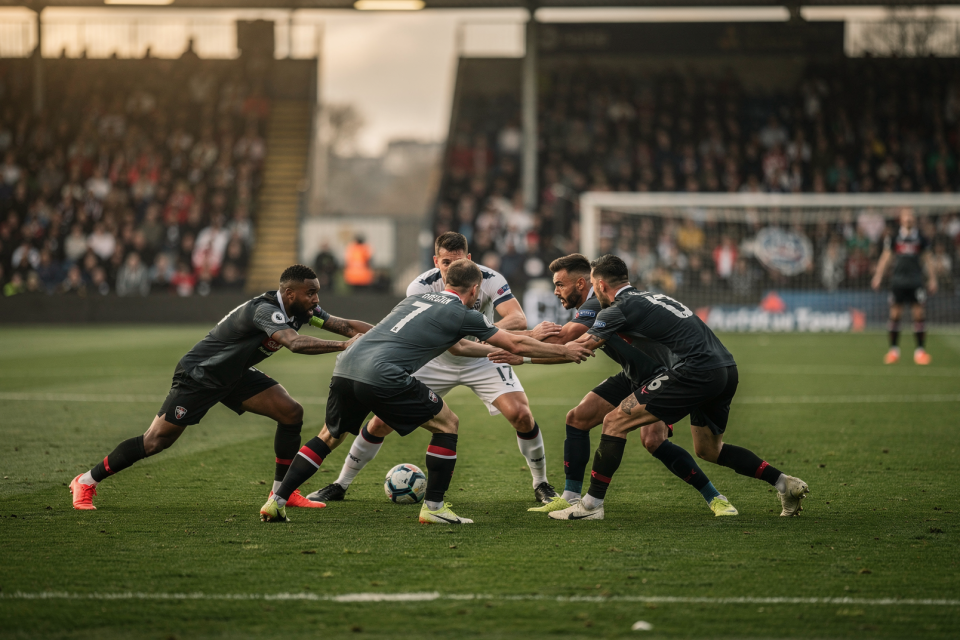
When a season reaches its sharpest point — knockout ties, title deciders, finals that define legacies — certain teams don’t just survive the pressure. They step into a different gear. And no, it’s rarely some mystical “big-game mentality” that descends from the sky. The real answer sits in a lattice of preparation, tactical clarity, squad construction, leadership distribution, and the quiet ability to neutralise chaos before it infects decision-making. Peaking when it matters is not magic. It is a repeatable system, engineered long before the first whistle of the decisive match.
What it really means when a team “peaks” under pressure
A team peaking under pressure isn’t simply winning tight games. It’s performing at or above its established level as the consequences balloon. You see it in cleaner decisions during a Champions League knockout phase, in composure while defending a one-goal lead in a title run-in, or in a second-half response during a cup final when the game plan has to adapt on the fly. Pressure, for these sides, doesn’t erode execution — it sharpens focus and simplifies choices.
The term gets thrown around loosely, but in elite sport it has a precise fingerprint. The team that peaks at the right moment is rarely the most talented across 38 league games. It’s the one best equipped to deliver its habitual performance — sometimes even an elevated version — when the margin for error evaporates. That distinction matters deeply, because far too many observers confuse a late surge with raw momentum. Beneath every surge is a set of observable mechanisms: role stability, automatic triggers, emotional reset protocols, and conditioning patterns that allow players to stay lucid while others start chasing the game.
Think of it this way: pressure doesn’t create new problems. It scrapes away the varnish and exposes the structural integrity beneath. A team with well-defined roles, rehearsed routines, and leaders who know how to anchor the tempo often looks unnervingly calm during the competition’s decisive phase — calmer than rivals who might possess more flair but less organisational coherence. That calm isn’t a gift; it’s constructed in training, reinforced through selection, and protected by staff who manage internal narratives across the long arc of a season.
| Factor | What it looks like in practice | Why it matters under pressure |
|---|---|---|
| Tactical clarity | Players know precisely when to press triggers, when to drop into a compact block, when to slow the game’s rhythm | Slash hesitation and eliminate wasted cognitive load in high-stakes moments |
| Leadership | Senior figures organise spacing, verbally reset the group, and absorb the emotional heat after setbacks | Prevents isolated panic from rippling through the entire side |
| Squad depth | Bench options sustain quality without forcing a tactical identity shift | Shields performance during injuries, late-season fatigue, and suspensions |
| Recovery and conditioning | Players still exhibit sharp acceleration and sustained concentration in the final quarter of the season | Blunts the physical drop-off that turns tight matches in the 75th minute onward |
| Experience | The group has navigated similar pressure environments before | Reduces the unfamiliarity that breeds rushed decisions |
What makes these factors particularly potent in modern football, rugby, tennis team competitions, and tournament sports generally is the end-of-season compression of time. There are fewer opportunities to repair errors — one bad sequence can delete months of work. Teams that genuinely “peak” seldom transform into something unrecognisably brilliant overnight. Instead, they become exceptionally difficult to disrupt, and that resistance is more valuable than any late tactical innovation.
Why some teams rise as the pressure rises
The simplest truth is that pressure acts like a solvent — it dissolves what is fragile and leaves what is solid. Different teams are constructed around different load-bearing walls. Some are engineered to absorb acute stress through structure; others lean heavily on rhythm, emotional momentum, or isolated moments of individual brilliance. When the temperature climbs, the first group stays functional for longer stretches, not because of some intangible grit, but because their game model doesn’t collapse under duress.
Psychological safety inside the group is a huge piece of the puzzle. Players who trust the system are statistically less likely to chase low-percentage actions when the match tightens. That doesn’t imply passivity. It means they’re more likely to make high-value passing choices, to resist the urge to hoof clearances into pressure zones, and to maintain defensive distances that suffocate rather than scramble. The crowd can be roaring, the scoreline can be ugly, but the team’s spine remains intact.
Then there’s the profoundly ordinary, often overlooked physical dimension. Workload management through January and February directly shapes who looks “mentally tough” in March and April. Fatigue isn’t just about tired legs — it erodes sprint timing, pressing intensity, duel success rate, and even attentional focus. The team that appears mentally robust late in the season may simply have banked more freshness earlier, giving them the neuromuscular capacity to execute when others are fading.
Leadership is another variable that doesn’t always sit where the armband is. The most resilient teams distribute problem-solving across several players — a centre-back who can freeze the tempo after an opponent’s surge, a midfielder who communicates clear triggers to younger teammates, a forward who leads the first line of defensive shape without sulking. That quiet choreography stops a single bad phase from metastasising into a catastrophic 10-minute collapse. It’s often the difference between a side that navigates pressure and one that dissolves into noise.
Selection stability also plays a quiet, powerful role. Late-peaking teams typically have a settled core, which breeds automaticity. When players encounter recurring patterns week after week, they don’t need to solve problems from scratch each time; recognition accelerates decision-making, and in high-stakes sport, recognition is gold. This is precisely why supposedly “boring” teams — the ones that stick to a clear script — suddenly look devastating when trophies are on the line. They don’t overthink; they react.
Here’s a practical way to spot whether a side is built for late pressure:
- The same core of players keeps appearing in decisive fixtures, regardless of rotation elsewhere.
- The team’s shape remains identifiable even after conceding first — no chaotic chasing.
- Substitutions inject energy without forcing a shift in tactical identity.
- Senior players visibly control emotional swings within 30 seconds of a setback.
- The side continues creating quality chances — or suppressing them — deep into the final 15 minutes.
Not every pressure-resistant team rises in the same fashion. Some become more aggressive, sensing fragility in the opponent. Others contract into a more compact, disciplined version of themselves, daring the opposition to find a way through. A rare few do both in sequence, which is why they end up dominating knockout stages and title races despite having looked thoroughly ordinary for long stretches earlier in the campaign.
| Pressure trait | Strong teams | Weak teams |
|---|---|---|
| Response after conceding | Stay structurally organised, return to the plan immediately | Become frantic, lose spacing, overcommit |
| Decision-making | Choose lower-risk, higher-value actions consistently | Rush passes, take speculative shots, concede fouls in dangerous areas |
| Game management | Control tempo and territorial balance with intelligence | Allow the match to spiral into end-to-end chaos |
| Emotional control | Recover composure rapidly after individual errors | Carry the echo of a mistake into the next phase of play |
| Tactical consistency | Keep roles and spacing clear even under extreme stress | Drift away from the original structure, creating gaps |
The tactical and physical factors that separate late peak teams from the rest
Championship-ready teams often win the unglamorous battles first. They travel with better protocols, recover with greater discipline, and defend compactly when fatigue bites. That foundation gives them a platform when the stakes become real. Tactical structure and physical robustness aren’t conversation starters at the pub, but they determine who still looks like themselves in the 85th minute of a semifinal.
Tactically, pressure rewards teams that can solve problems with a minimal number of actions. If your build-up requires five or six interconnected passing combinations to escape a high press, you’re vulnerable when nerves tighten the touch and narrow the vision. But a side that can break pressure with one well-timed third-man run, a diagonal switch of play, or a purposeful long ball into a targeted zone stays in control far more often. The back end of a season favours teams that don’t need pristine conditions to function — they can operate in the mess and still find clarity.
Physical conditioning is just as decisive. A team that fades in the final quarter of matches could be showing a pure fitness issue, but more often it reflects load-management failures across the preceding months. Staff who rotate intelligently — understanding peak demands for key players in April and May — protect the legs that will be asked to produce match-defining moments. That doesn’t guarantee trophies, but it tilts the probability heavily toward having your best athletes still sharp when the competition reaches its crescendo.
Recovery routines matter far more than supporters typically recognise. Sleep quality, nutritional timing, travel logistics, and the spacing of high-intensity matches can all move the needle on whether a squad is fully available during the final stretch. Elite clubs and national teams increasingly treat this as a genuine performance edge, and rightly so: when the margins shrink to a single duel or a half-second of reaction time, a small physical advantage can become the entire difference.
A team’s tactical identity also matters enormously because pressure tends to simplify the game. The louder the occasion, the more valuable it becomes for every player to know exactly what the team stands for. If core principles are stable, athletes can fall back on deeply ingrained habits rather than improvise under psychological load. This is why many top-level coaches prefer a defined — even deliberately narrow — game model over a flexible framework that only works when confidence is flowing freely.
There is an important caveat: rigidity can backfire. The strongest teams are not robotic executers of a script. They are organised enough to stay coherent and agile enough to adjust when the original plan hits a wall. So the best late-peaking team isn’t the one with the most conceptually elaborate tactics. It’s the one with the most usable tactics — plans that hold up when the noise is deafening and the margins are cruel.
How elite coaches and captains build teams that handle the biggest moments
Teams don’t stumble into clutch performance by accident. Coaches and captains deliberately engineer the conditions that shrink uncertainty and make high-pressure moments feel like familiar territory. The biggest stages still carry a physical charge — the noise, the stakes, the global audience — but they become less disorienting when the group has already rehearsed similar scenarios dozens of times in controlled environments.
One of the most effective, and least discussed, coaching habits is linguistic consistency. When players hear the same concepts, the same trigger words, and the same structural references throughout an entire season, there’s no need to decode a new message during the final month. That continuity is especially critical in tournament football, where preparation windows are minuscule. Coaches who keep their messaging clear and stable give their players a far better chance to act decisively rather than second-guess themselves in the moment.
Captains occupy a distinct but equally vital space. A top-level captain does more than rally the troops with a fist pump. They regulate the group’s emotional thermostat. They know when to speak to an official to buy a few seconds, when to calm a young full-back who’s just been skinned, and when to demand a reset after a dangerous transition. In the most pressurised contests, this leadership becomes visible even when the captain isn’t touching the ball — because the shape stays, the communication remains steady, and the panic never sets in.
There’s also a hard selection lesson buried here. The most effective coaches usually favour role reliability over name value when the stakes escalate. That can infuriate supporters who want the “best XI” on paper every week, but pressure rarely rewards reputation alone. It rewards clarity, trust, and athletes who can execute a specific function without their brain becoming a jumble of second guesses. The star who needs five touches to settle into the game can become a liability; the less glamorous player who performs one simple role with machine-like consistency becomes invaluable.
Scenario training is another edge. Teams that rehearse late-game states — protecting a narrow lead, chasing a goal with 10 men, managing corners under aerial bombardment, reorganising after a red card — are demonstrably less likely to panic when those exact moments arrive. This is especially relevant in knockout competitions and domestic cup runs, where a single sequence can define an entire season’s narrative. The more a team has practised a situation, the less it feels like a crisis; it simply becomes the next phase of the drill.
A practical checklist for building pressure resilience includes:
- Maintain stable tactical principles across the entire season, avoiding radical mid-campaign shifts.
- Rehearse high-stress scenarios in training — not as a gimmick, but as a regular part of the weekly microcycle.
- Protect player freshness through intelligent rotation and individualised load management.
- Use formal and informal leaders to stabilise emotional swings in real time.
- Select players who consistently execute roles in tense fixtures, not just in comfortable league wins.
- Regularly audit whether the team’s late-game behaviour actually matches its tactical plan.
The smartest teams also manage the narrative pressure that builds in the media ecosystem. Once a side is branded “fragile” or “bottlers,” every setback is magnified and fed back into the players’ consciousness. Strong coaching staffs combat this by relentlessly directing attention toward controllables: pressing triggers, rest defence positioning, set-piece coordination, transition rules. These are the micro-details that accumulate into a giant result, and they’re far more productive to fixate on than the storylines swirling outside the training ground gates.
Why some squads collapse while others sharpen
The split between teams that peak and teams that unravel is rarely as theatrical as it appears from the stands. Collapse is usually an accumulation of small, quiet failures — fatigue in the wrong muscle groups, tactical ambiguity about who steps and who covers, communication gaps that turn one error into three. When pressure lands, those pre-existing cracks stop being invisible.
In many cases, the unravelling starts with ambiguity. If players are unsure about pressing responsibilities, cover shadows, or who has the authority to slow the tempo down, hesitation creeps in. That hesitation invites pressure. Once the opposition senses uncertainty — a midfield line that’s a stride too deep, a centre-back checking over his shoulder twice — they press more aggressively and the game starts moving too quickly for the side under strain. Panic, in this context, is frequently a tactical symptom that masquerades as a psychological one.
Poor bench management can accelerate the collapse. Substitutions introduced without a clear tactical purpose disrupt rhythm rather than injecting energy. Late-season fatigue exposes this sharply. A squad with little genuine depth might look dynamic for 70 minutes but become increasingly threadbare once injuries, suspensions, and fixture congestion accumulate. That’s why some teams appear world-class for an hour and increasingly fragile for the final 20 minutes — the drop-off isn’t just physical; it’s a loss of coordination.
Another recurring pattern is overreliance on emotional momentum. Teams that depend on feeling good to perform often look irresistible when things click but crumble when the script flips. Pressure tests whether a side can function without the warm blanket of confidence. The best late-peaking teams can. They don’t need the match to feel comfortable to remain structurally effective. They can be uncomfortable and still execute.
Leadership gaps are also brutally exposed. Not every talented side has enough on-field problem-solvers. When adversity hits and everyone looks to the same two or three individuals, the team becomes predictable — shut those leaders down and all answers dry up. Resilient teams distribute responsibility more evenly, which is why they look composed even when their star players are effectively contained. The system itself becomes the leader.
| Team that peaks | Team that collapses |
|---|---|
| Clear, rehearsed roles under pressure | Unclear or overlapping responsibilities |
| Stable emotional tone, even after conceding | Visible frustration, finger-pointing, and blame |
| Fresh enough to sustain intensity through final phases | Physically fading in the decisive 20-minute windows |
| Substitutes add solutions and maintain identity | Bench changes disrupt rhythm and change the team’s shape negatively |
| Leaders reset the group within moments | Errors become contagious, spiralling into multiple mistakes |
The gap separating a team that peaks from one that crumbles is rarely a single catastrophic weakness. It’s usually a stack of small deficiencies that compound each other. And that’s what makes this subject so revealing: pressure doesn’t invent problems; it simply walks through the roster and reveals every crack that was already there.
How analysts and fans can identify a genuine peak before the final stretch
The smartest way to gauge whether a team is genuinely peaking is to ignore the win-loss column for a moment and zoom in on the texture of performance. Results mask an awful lot. A side can collect three straight wins while still showing alarming signs of structural strain, or lose a match while operating with excellent tactical discipline. The details — the stuff that fills the scouting reports — tell the real story.
Begin with game control. Does the team still look organised when the match becomes awkward? A genuine late peak often reveals itself as calm after disruption. The side doesn’t need to dominate possession for 90 minutes, but it recovers quickly from setbacks — a disallowed goal, a missed penalty, a period of sustained opponent pressure — and doesn’t allow one bad patch to cascade.
Then study late-game behaviour. Teams that are truly timing their run well tend to improve in the final 20 minutes rather than wilt. They win more second balls, sustain attacking pressure longer, and make more intelligent substitutions. In cup football and tournament structures, this quality is non-negotiable because tight finishes are inevitable. Watch for the physical and mental markers that persist when most sides start to fray.
Examine the bench with a critical eye. If substitutes reliably enhance the team rather than merely plug holes, that’s a powerful indicator. Depth isn’t a headcount — it’s trust. When a manager can introduce three players and the team’s rhythm doesn’t skip a beat, the group is approaching peak readiness.
Set pieces serve as an excellent pressure barometer. In high-stakes matches, dead-ball situations account for a disproportionately high share of decisive moments. A team that is sharp at both ends on corners and free-kicks — not lucky, but consistently dangerous and defensively coordinated — usually possesses the focus and detail orientation required to handle the season’s sharp end. Defensive organisation on restarts, particularly against opponents who pack the box, often separates the calm from the nervy.
For analysts and devoted fans tracking a run-in or a tournament, these markers are the most useful:
- Stable structure even after conceding — no shape disintegration.
- Strong final-quarter intensity, both with and without the ball.
- Bench impact that adds energy without tactical disruption.
- Clear, visible on-pitch leadership that doesn’t require the armband.
- Set-piece efficiency in both boxes, reflecting preparation standards.
- Low error count in high-leverage phases — the opposite of self-destruction.
It’s also worth asking whether a team’s rise is sustainable or circumstantial. Some sides peak because the fixture list briefly smiles on them. Others peak because their internal standards and processes have genuinely improved. The difference becomes obvious when the level of competition stiffens. Sustainable peaks are buttressed by structure, depth, and ingrained habits. Temporary peaks are powered by adrenaline, a friendly run of games, and individual form spikes. That distinction matters enormously because not every late surge signals a team destined to lift silverware. The sides most likely to do so are usually the ones that look the most repeatable — not the most dramatic. Under pressure, repeatability is gold.
Final thoughts: what the biggest moments really reward
When the stakes are at their highest, the great reveal is this: pressure systematically rewards preparation over inspiration. The teams that thrive when a season narrows down to its decisive moments almost always bundle together tactical clarity, physical freshness, emotional steadiness, and a distributed leadership that keeps the game from spinning out of shape. Talent remains essential, but in the moments that define careers, talent without a reliable structure turns fragile very quickly.
For anyone trying to assess a team’s chances in a title race, a two-legged knockout tie, or a one-off final, the smartest question isn’t “Who looks the most impressive right now?” It’s “Who still looks recognisably like themselves when everything tightens?” The answer tends to reveal which squad was genuinely engineered for the sharp end of the season, and which was merely enjoying a favourable gust of form.
FAQ
Why do some teams perform better in finals than in league matches?
Finals compress the entire contest into a single high-stakes event, which inherently rewards teams with clear tactical organisation, steady emotional regulation, and physical readiness for one all-or-nothing encounter. League football tests different qualities — consistency over 38 games, squad rotation discipline, the ability to grind out results on a random Tuesday night. The skills that win leagues often overlap with those that win finals, but the weighting shifts: in a final, a single well-rehearsed structural plan can nullify an opponent’s deeper talent base.
Is “mental toughness” the main reason teams peak?
Mental toughness is a significant piece, but it’s not a standalone explanation. Peaking under pressure almost always comes from a stack of interdependent factors: psychological resilience supported by tactical clarity, physical conditioning that prevents late-match cognitive decline, stable leadership that stops emotional contagion, and squad management that ensures the right players are on the pitch in the decisive minutes. Strip away the structure, and “toughness” quickly evaporates.
Can a team learn to handle pressure better?
Absolutely. Teams can systematically improve by embedding high-stress scenario rehearsals in training, clarifying role responsibilities so nobody hesitates under duress, deploying experienced leaders to stabilise the group’s emotional pulse, and managing player loads so that fatigue doesn’t masquerade as mental weakness. These are coachable, trainable, and entirely repeatable processes — not mystical traits you either have or don’t.
Do experienced players always help in big moments?
Not universally, but experience provides a structural advantage because it strips away the unfamiliarity that amplifies pressure. Veteran players have been there before — they recognise the physiological response, they know how to slow the game when it accelerates beyond comfort, and they’re less likely to be hijacked by the occasion. The caveat: experience only helps if it’s paired with a functioning tactical plan. A seasoned player adrift in a chaotic system will still look lost.