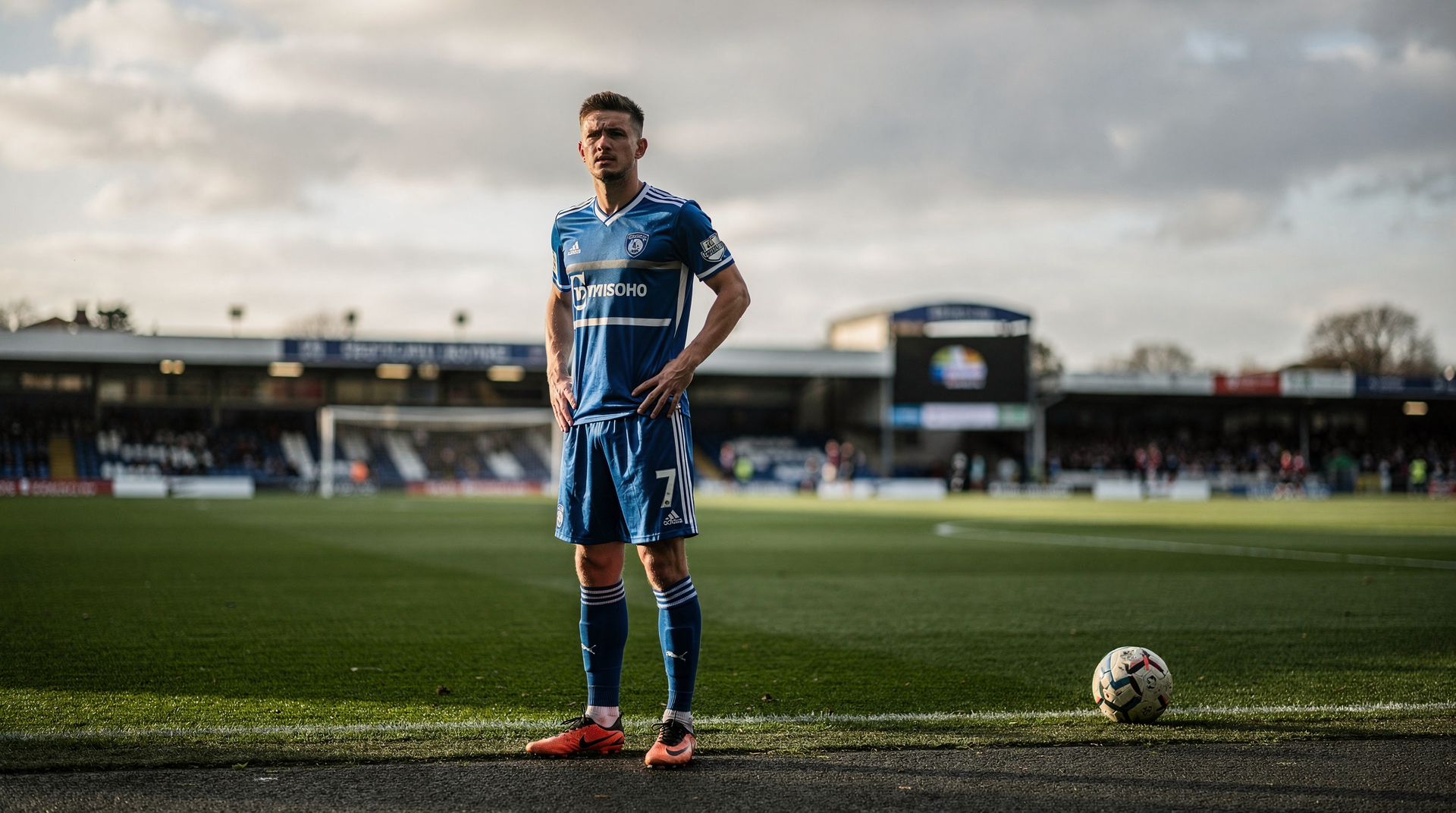
A full-back’s rise rarely happens by accident. It’s assembled patiently from repeatable habits — sharp positioning, clean delivery under pressure, and the kind of game intelligence that makes a manager trust him in both possession and recovery moments. For every spectacular overlapping run that goes viral, there are a hundred small decisions that shape a defender’s reputation long before the highlights arrive. This breakdown unpacks how that reputation takes shape on the pitch, what actually moves the needle, and how to read a defender’s development beyond the headline numbers.
What makes a rising full-back stand out?
A full-back starts standing out the moment his game solves problems for the team instead of just filling a jersey. The clearest early markers aren’t flashy; they’re structural. Consistency in defensive duels, disciplined positioning, clean ball progression, and the ability to influence attacks without sacrificing defensive shape. In the modern game, reputation builds not through one glorious overlap but through repeated actions that make a manager feel safer on that side of the pitch — and that feeling then lets the rest of the system breathe.
That’s why analysts, coaches, and supporters often spot different things at different stages. Fans tend to notice raw pace and energy first. Coaches scan for timing, scanning frequency, and decision-making under pressure. Recruitment teams care most about whether those actions repeat against better opposition, because that’s where potential hardens into trust. A young full-back can have every athletic gift, but if his positioning melts when the press shifts, or if his delivery breaks down in the final third under real stakes, he stays a prospect rather than a bankable starter.
The most useful question to ask about a rising full-back is deceptively simple: does his presence improve the team’s structure on both sides of the ball? When the answer becomes “yes” across a long enough run of games, his reputation starts compounding very quickly.
The first layer: defensive reliability
Defensive reliability is almost always the foundation. A full-back earns credibility when he can protect his flank without needing constant rescue from a centre-back or holding midfielder. That doesn’t mean winning every duel; it means reading danger early, narrowing the attacker’s angle, and keeping his body shape disciplined when isolated one-v-one. In a high line, for example, the best defenders use their cover shadow to cut off the inside passing lane, forcing the winger into a harmless wide area — a move that never makes a match report but wins matches quietly.
In practice, this shows up in details that coaches treasure. He delays an attack just long enough for teammates to recover. He stays connected to the back line when the ball flips to the opposite side. He chooses when to engage and when simply to contain. Those choices don’t need a highlight reel to be valuable; they’re the pulse of defensive structure. The full-back who can hold a tricky winger at arm’s length for four or five seconds while the midfield pivot tracks back gives his side a tactical comfort blanket.
A rising defender also learns to defend without diving in. Early-career full-backs often lean too heavily on recovery pace. That works in youth football or against slower wide players, but higher levels punish poor balance and overcommitment ruthlessly. The more reliable a player becomes in his starting position, the more his reputation shifts from “energetic” to “calm under pressure” — and that shift usually correlates with a manager’s growing willingness to leave him one-v-one.
The second layer: progression with the ball
Ball progression is where many modern full-backs separate themselves from the functional defenders of a previous era. A full-back who can receive under pressure, turn cleanly on the half-turn, and move the ball forward changes how an entire team attacks. In possession-heavy systems, that skill helps the side escape the opposition’s first press and build from the back. In transition-based teams, it turns a defensive action into an immediate attacking lane without needing an extra pass.
The separator isn’t just carrying the ball; it’s carrying it at the right moment. Some full-backs dribble because they can. The better ones dribble because the movement ahead of them has opened a gap, and they exploit that window. Coaches value a player who improves the shape of possession by making sensible forward decisions, not one who forces a move and leaves the defence exposed on the turnover. There’s a razor‑thin line between being an outlet and being a liability, and it’s measured in decision speed.
Passing nuance matters just as much. A rising full-back typically develops three reliable passing options that become second nature: the simple outlet pass to the nearest centre-back or pivot, the line‑breaking pass into a midfielder’s feet, and the angled ball into a wide runner up the flank. Once those become routine, the full-back stops being viewed as a possession passenger and starts being treated as a genuine source of advantage — the player who can stretch the opposition press because they know he’ll hurt them if they leave him unattended.
How reputation is actually built over a season
Reputation is built on repetition, context, and proof against stronger opponents. One impressive month can generate intrigue, but sustained performances across league slogs, cup ties, and difficult away fixtures generate belief. The climb from promising young player to respected full-back almost always follows a pattern: first recognition, then trust, then expectation — and expectation is the heaviest burden because it means the standard is already set.
The most important thing is that the performances survive scrutiny in chaotic match states. A full-back can look immaculate in a side that dominates possession and still struggle when the game becomes faster, wider, and more physically demanding. The real test arrives not in comfortable wins but in the awkward 1‑0s, the grinding away draws, and the nights when he has to defend his box for long stretches with the crowd howling for a mistake. Those environments amplify every decision, and a player who holds his nerve in them builds a reputation that travels with him.
Clubs and analysts then ask whether the player’s level is portable. Can he handle stronger wingers who attack with variety? Can he process tactical shifts quickly, like flipping from an overlapping role to an inverted one mid‑match? Can he contribute when his team is pinned back and his usual attacking space is gone? These questions separate a useful squad option from a long‑term solution because they expose whether the development is genuine or just a product of a favourable system.
A simple way to read the rise
When you’re trying to cut through noise, a handful of on‑pitch signals tell you whether the improvement is real. These aren’t exhaustive, but they capture the way a full-back’s game matures from physical potential into tactical value.
| What people notice | What it usually means | Why it matters |
|---|---|---|
| Strong pace | Recovery ability and overlap potential | Helps in defending transitions and supporting attacks without leaving a chronic void |
| Clean first touch | Composure under pressure | Allows the team to keep possession in tight areas, especially when pressed |
| Accurate crossing | End product from wide zones | Turns territory into chances, and forces defenders to close down more aggressively |
| Good positioning | Tactical maturity | Reduces defensive emergencies before they start; often the hardest trait to teach |
| Consistent selection | Growing trust from the manager | Often the clearest sign that development is real, not just a flash of form |
This is where the modern full-back narrative gets interesting. The role is no longer just about running up and down the line — it’s about managing risk in real time. A rising player who understands when to attack, when to pause, and when to hold the structure is often far more valuable than a purely explosive athlete. The best ones make the game look slower than it actually is.
The role of tactical fit
Tactical fit can accelerate a player’s reputation faster than raw ability alone. A full-back in a system that encourages aggressive overlaps will look more visible than one in a conservative back four. Likewise, a player in a possession‑dominant side may rack up higher touch counts and more progressive passing opportunities than he would in a low‑block team. To the untrained eye, that can look like a massive leap in quality when it’s partly a function of role.
That’s why context is non‑negotiable in any fair evaluation. Does he stay deep while the winger holds width? Is he asked to invert into midfield and control circulation, or does he make underlapping runs into central channels? These are not minor details; they shape the numbers, the highlights, and the public perception of the player. A full-back who looks limited in one set‑up might thrive in another because the tactical lane simply matches his natural strengths.
A rising full-back often takes a leap once his club finds the right tactical lane for him. Sometimes that’s as a traditional overlapping defender who hugs the touchline. Sometimes it’s as an inverted full-back who steps into midfield to create numerical superiority. Neither role is inherently superior — the best version of the position is the one that harmonises with the player’s decision‑making and physical profile. The real mark of development is when he can perform both roles without his level dropping.
Which skills separate a prospect from a trusted full-back?
The gap usually comes down to decision speed, defensive repeatability, and end‑product quality. A prospect can have pace and energy, but a trusted full-back reads danger earlier, chooses simpler solutions when the situation demands them, and contributes in ways that consistently help the team keep its shape. That blend turns raw talent into a durable reputation.
It’s tempting to overvalue visible attributes. Sprint speed is easy to spot. Crosses into the box are easy to remember. But the less visible skills often dictate whether a defender becomes a mainstay. Scanning over the shoulder before receiving, narrowing the angle of a counter‑attack with body positioning, covering a central midfielder who has pushed on, and staying disciplined when the ball is on the opposite side — these are the habits that build lasting value because they function regardless of the system.
A useful way to frame a full-back’s development is to break the role into four interdependent areas:
- Defending space rather than chasing the ball — anticipating where danger will develop, not where it is right now.
- Receiving and recycling under pressure — keeping the ball alive when the opposition press is at its most intense.
- Advancing play through carries or passes — picking the right moment to push the team forward.
- Supporting attacks without losing structural control — knowing when to join the attack and when to stay behind as an insurance policy.
A young full-back who improves across all four dimensions will typically rise faster than one who excels in only one. Managers aren’t hunting for isolated skills; they need assurance that the player can operate within a coherent system week after week without unravelling the team’s balance.
Common mistakes that slow the rise
The most common mistake is overplaying the athletic side of the role. Young full-backs often believe their pace can fix anything, but speed only helps if the starting position is correct. When a defender is already two steps late, the recovery sprint becomes a last‑ditch fix rather than a sign of control, and while it might earn applause, it also signals that something structural went wrong earlier.
Another frequent issue is overcommitting in the final third. A rising full-back naturally wants to make an impact, so he may join attacks too eagerly, leaving dangerous space behind him. That can work in one match, but repeated exposure on the transition — goals conceded from the same channel over and over — erodes trust fast. Coaches notice when a side starts leaking from a specific wide area, and the full-back’s reputation usually pays the price.
Then there’s the quiet problem of inconsistency in end product. A player may create promising crossing positions but fail to select the right type of delivery. Low driven balls, clipped passes, and back‑post crosses all serve different purposes depending on the movement in the box and the goalkeeper’s tendencies. The better a full-back reads the game state — where the runners are, how the centre‑backs are shifting — the more useful his final action becomes. Until that consistency arrives, end product remains a question mark rather than a weapon.
How analysts and fans should evaluate a rising full-back
The best evaluation leans on both the eye test and the context that surrounds it. A rising full-back should be watched across several matches with different dynamics — against a low block, against a high press, against a pace‑heavy winger, against a technical one — not judged from one spectacular performance or one bad night. The goal is to see whether the same patterns repeat when the opposition changes and the pressure morphs.
Start with his positioning. Is he caught too high when possession turns over? Does he protect the inside channel or get routinely dragged into wide dead ends where he can’t influence play? Then move to his recovery habits. Does he make purposeful runs back with his head up, scanning for danger, or is he just chasing the play? After that, assess his influence in possession. Does he advance the ball with intent and timing, or is he mostly recycling safe, sideways passes that add no progression?
Numbers can illuminate, but they need interpretation. A high touch count can mean genuine involvement — or it can mean the team is funnelling easy passes to him because he’s the safe option. Cross completion can rise because the player is selective and waits for the right moment, or because he only delivers when the box is already overloaded. Data works best when paired with the tactical situation and the eye test, not as a standalone verdict.
A practical checklist for evaluation:
- Defensive stance: does he hold shape when isolated one‑v‑one?
- Press resistance: can he keep possession under pressure and turn out of trouble?
- Passing range: does he vary his delivery intelligently based on the movement ahead?
- Transition control: does he recover his position quickly and with awareness after attacks?
- Consistency: does he repeat the same level against stronger opposition week after week?
This discipline is especially vital in the Premier League, where wide areas are attacked relentlessly and transition moments arrive at a brutal pace. A player who survives that baptism consistently earns attention quickly because the league has a habit of exposing weakness with frightening speed. The margin between a capable full-back and a liability can be a single poor decision, and the top flight magnifies the cost.
Table: signs of real development vs early hype
Separating genuine growth from early excitement is one of the hardest parts of talent evaluation. The table below offers a practical framework for that distinction.
| Real development | Early hype |
|---|---|
| Plays well in different match states — leading, chasing, under sustained pressure | Looks good only when the team dominates possession and the game is comfortable |
| Makes few avoidable errors; mistakes are forced by opposition quality, not decision‑making | Relies on athleticism to recover from mistakes that better positioning would have prevented |
| Contributes defensively and offensively in the same match; two‑way value is consistent | Produces one‑sided value — perhaps threatening going forward but a liability without the ball |
| Keeps performances steady over months, even when form fluctuates around him | Peaks briefly in a handful of matches, then fades when the novelty wears off |
| Adapts to tactical instructions and can play more than one role without his level dropping | Looks effective only in one system and struggles when asked to adjust |
The distance between those two columns is often where a reputation is won or lost. Supporters may fall in love with flashes of brilliance, but managers build teams on repeatability. The full-backs who last are usually the ones who, after the initial excitement fades, look almost boringly reliable — because reliability is the one thing that compound errors never erode.
Why a full-back’s reputation matters beyond the position
A full-back’s reputation ripples way beyond his own flank. It affects selection, transfer value, tactical flexibility, and the way the rest of the team is constructed. When a manager trusts the right side or left side of defence, the entire structure can become more ambitious elsewhere. That trust changes how midfielders position themselves — a holding midfielder knows he can step up more aggressively because the full-back will cover the space behind. Wingers can attack the half‑spaces with more freedom, knowing the overlap will be timed correctly. In short, a reliable full-back unlocks the game for others.
It also reshapes external perception. Scouts tend to look for players who can survive pressure and adapt to different instructions. A full-back who demonstrates he can handle both pure defensive assignments and progressive responsibilities becomes far more attractive because he can fit multiple systems — and that flexibility is premium currency in the Premier League, where fixture congestion and tactical variety demand players who can do more than one job well. Transfer values for full-backs who combine defensive solidity with ball progression have spiked for precisely this reason.
Reputation also carries a psychological dimension. Once a player is known as dependable, opponents begin to alter their approach. They attack his side less, or they try to overload him with different movement patterns, testing whether the dependability is real. Teammates instinctively pass to him in awkward moments because they know he won’t panic. Managers feel comfortable handing him more responsibility — switching his role mid‑match, trusting him to handle a dangerous winger without a double‑team. In other words, reputation changes the game before kickoff even begins, because it reshapes the risk calculations of everyone on the pitch.
There’s a subtle point here that’s easy to miss: rising full-backs are often judged by their future potential, but their real value begins the moment they reduce uncertainty. A coach doesn’t always want the flashiest player; sometimes he just wants the one who won’t unravel the structure when the match gets messy. That’s the quiet, profound difference between a developing hope and a trusted asset.
What development usually looks like over time
The path is rarely linear. A young full-back might begin as an energetic runner who survives on pace, then gradually learn defensive discipline — holding the line, judging when to drop, when to step up. Next comes the addition of passing variety: no longer just the safe ball but the ability to break lines. Only later does he become genuinely influential in the final third, where his decisions in crossing and movement carry consistent weight. Some players mature quickly; others need a long stretch of loan football, rotation minutes, and patient tactical coaching before the full picture emerges.
Clubs that develop full-backs well usually give them controlled exposure. Too little exposure and the player never learns the feel of real pressure — the kind that makes his heart race and his decisions sharper. Too much, and the mistakes can become confidence‑breaking, eroding the very qualities that made him promising. The sweet spot is enough responsibility for the player to grow, but enough structure around him to keep the learning productive. A well‑timed substitution or a tactical tweak that covers for him in a difficult spell can be the difference between a development curve that bends upward and one that stalls.
Over time, the reputation of a rising full-back becomes easier to describe. He is no longer just the young player with pace. He is the defender who solves wide problems early, supports attacks intelligently, and reads the rhythm of the match almost intuitively. That’s the point where the label “prospect” starts to give way to something more permanent: reliability.
What to look for next when a full-back keeps rising
The next and hardest question is whether his game scales up in harder environments. A strong reputation at one club or one level doesn’t carry automatically. The next proof comes against faster wingers, more complex pressing schemes, and opponents who force him to defend for long, grinding stretches where any lapse is punished. These are the matches where a full-back’s concentration, not just his talent, gets stress‑tested.
Watch for three things specifically. First, whether he keeps his concentration when his side loses control of possession and he suddenly has to defend wave after wave without respite. Second, whether he still offers value when his attacking space is deliberately taken away — when opponents block the overlap or show him inside. Can he still contribute through underlaps, link‑up play, or switching the point of attack? Third, whether he continues to make correct decisions when the crowd noise rises, the tempo becomes frantic, and the stakes squeeze every touch. Those are the moments where an emerging full-back either strengthens his standing or quietly slips back into the category of a useful but limited player.
The most impressive rise, in the end, isn’t the loudest one. It’s the one built on patterns that keep holding when the pressure becomes almost unbearable. A full-back who earns that kind of reputation has usually done so by weaving together discipline, timing, and a crystal‑clear understanding of what the team needs from him in each phase of the game. That combination is what turns a promising wide defender into a player people trust implicitly — the kind whose name in the team sheet makes everyone around him stand a little taller.
FAQ
What defines a rising full-back?
A rising full-back is a defender whose performances demonstrate steady, measurable growth in both defensive reliability and attacking contribution. The key signs go beyond athleticism: consistency across different match states, tactical awareness that reduces defensive emergencies, and the ability to influence matches without ever compromising the team’s structure. When these traits repeat over a significant run of games, the “rising” label becomes fact.
Is pace the most important trait for a full-back?
Pace is an asset, but it is not the cornerstone of a full-back’s reputation. Recovery pace can mask positional errors, but at higher levels, positioning, anticipation, and decision‑making matter far more because they prevent the need for desperate recovery sprints in the first place. A full-back who reads the game quickly and holds sound body shape can often neuter a quicker winger without ever hitting top speed. Pace is a safety net; the real foundation is intelligence.
How can fans tell if a young full-back is genuinely improving?
Look for improvement across multiple matches, especially against higher‑quality opposition. Genuine progress shows up in the details: fewer panic clearances, more composed switches of play, better timing when stepping into challenges, and smarter use of the ball when under pressure. If the same positive patterns appear even when the team isn’t playing well, that’s a very strong signal that the development is real rather than a purple patch.
Why do some full-backs get more recognition than others?
Visibility plays an outsized role. A full-back in an attacking, possession‑dominant team will naturally rack up more touches, more assists, and more highlight‑friendly moments, while a full-back in a more conservative system might be just as effective but far less conspicuous. Context — the system, the team’s style, the manager’s instructions — shapes perception as much as performance does, which is why a deeper look at the tactical setting is essential before drawing conclusions.